When Is the Best Time to Visit Humantay Lake? (2026 Guide)
The lake changes with the season and with the clock. A Cusco guide breaks down the months, the mornings and the trade-offs.
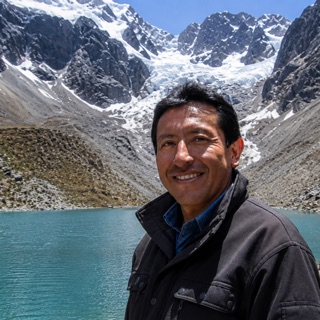 Written with Carlos Mamani, Humantay Lake tour guide & high-altitude specialist
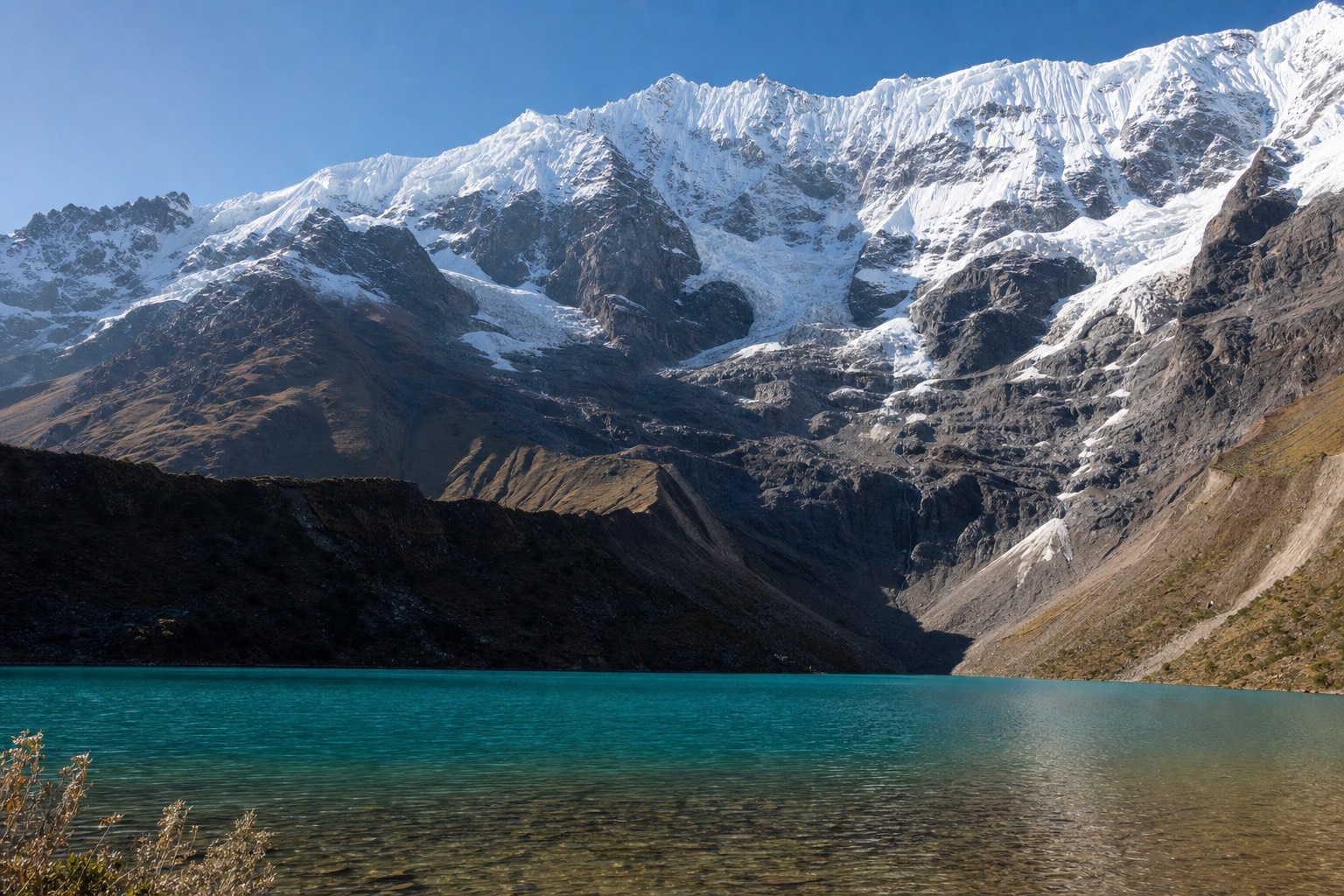
Short answer
The dry season, May through September, is the reliable window: stable mornings, clear glacier views and a firm trail. June and July bring peak crowds, so May and September are the sweet spots. Whatever the month, be at the lake in the morning; tours leave Cusco at 3:30-4:00 AM for exactly that reason.
I read the sky over Soraypampa the way other people read a bus timetable. In June the pattern barely changes: hard frost at dawn, sharp blue light by eight, wind after noon. In February I have stood at the shore while the glacier vanished into cloud before the last hikers arrived, and the turquoise turned grey without it. Same lake, different planet. When people ask me for the best time to visit, I give them two answers, because the month you choose and the hour you arrive matter almost equally.
What are the dry and rainy seasons like?
The Cusco region splits cleanly in two. May through September is the dry season: cold nights, stable clear mornings, firm trail. November through April is the wet season, peaking in January and February, when the path turns muddy and cloud regularly hides the glacier. October and April sit in between as transition months.
The rainfall numbers tell the story plainly. January brings roughly 150 mm of rain to the region and February about 132 mm, while the core dry months see only a fraction of that. Rain here rarely means all-day drizzle; it means afternoon and evening storms that soak the trail, feed the mud and stack cloud against the peaks. Mornings stay the clearer half of the day in both seasons, which becomes important later in this guide.
Temperature swings are about altitude, not season. Around Soraypampa at roughly 3,900 m, daytime highs reach about 14°C while nights drop to around 2°C, and dry-season nights dip below freezing. You will hike in layers in any month. Cusco itself, at about 3,400 m, follows the same pattern a few degrees warmer.
| Dry season (May-Sep) | Rainy season (Nov-Apr) | |
|---|---|---|
| Rainfall pattern | Occasional, brief | Frequent storms, Jan peak ~150 mm |
| Trail underfoot | Firm, dusty, grippy | Muddy, slippery on the steep sections |
| Glacier visibility | Usually clear all morning | Often cloud-covered by late morning |
| Lake colour | Vivid turquoise in sun | Muted grey-green under cloud |
| Nights and dawns | Below freezing, brutally clear | Milder but damp |
| Crowds | Heaviest, June-August peak | Lightest of the year |
What is each month like at the lake?
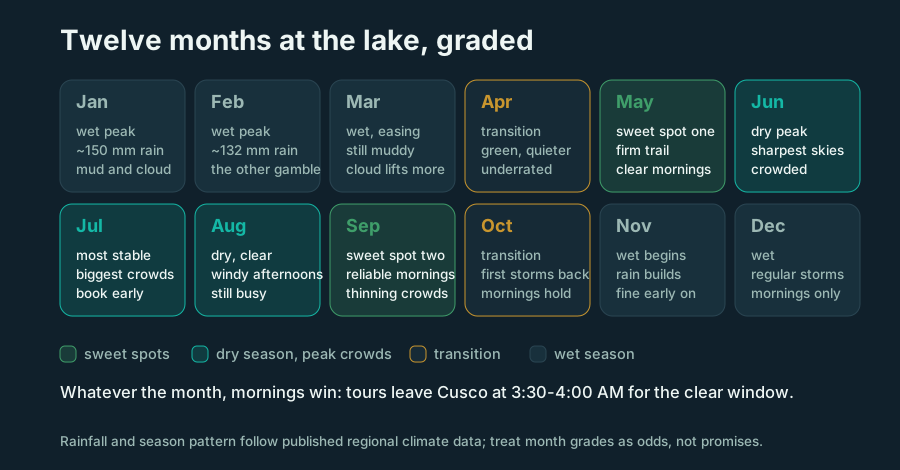
No month is forbidden, but they are far from equal. June and July deliver the most dependable skies and the biggest crowds. May and September keep most of the reliability with more room at the shore. January and February are the gamble months, when mud and cloud can take the view away entirely.
Here is my month-by-month read, the one I give friends planning a trip. Treat it as odds, not promises; I have seen flawless February mornings and one miserably wet June day.
| Month | Season | Trail and sky | My verdict |
|---|---|---|---|
| January | Wet, peak rain | Mud, frequent cloud on the glacier | Riskiest month, go only if flexible |
| February | Wet, peak rain | Slippery trail, short clear windows | The other gamble month |
| March | Wet, easing | Still muddy, cloud lifts more often | Improving, stay morning-strict |
| April | Transition | Trail drying, green valleys, softer light | Underrated, fewer people |
| May | Early dry | Firm trail, clear mornings, snow-fresh peaks | Sweet spot number one |
| June | Dry, peak | Sharpest skies, freezing dawns | Superb, but crowded |
| July | Dry, peak | Most stable month, biggest crowds | Book early, start early |
| August | Dry, peak | Clear, windy afternoons | Excellent, still busy |
| September | Late dry | Reliable mornings, thinning crowds | Sweet spot number two |
| October | Transition | First storms return, mornings mostly hold | Good with a flexible date |
| November | Wet begins | Building rain, greener slopes | Fine early, riskier late |
| December | Wet | Regular storms, holiday crowds in Cusco | Mornings only, pack rain gear |
If you want the deeper weather detail behind this grid, I break down temperatures and rainfall further in the month-by-month weather guide, and I wrote honestly about what a bad-weather day looks like in my piece on the rainy season at Humantay.
What is the best time of day to be at the lake?
Morning, and the earlier the better. The glacier is most often clear before midday, the light hits the water directly and turns it vividly turquoise, wind stays low, and the shore is quietest. This is exactly why day tours leave Cusco between 3:30 and 4:00 AM rather than at a civilised hour.
The pre-dawn alarm is the single most complained-about part of this trip, so let me defend it. The drive from Cusco takes around 3 to 3.5 hours, and the hike up takes up to two more. Leave at 3:30 AM and you are standing at the water while the mountain is still calm. Leave at 8:00 AM and you arrive in the windy, cloud-prone afternoon along with everyone who slept in.
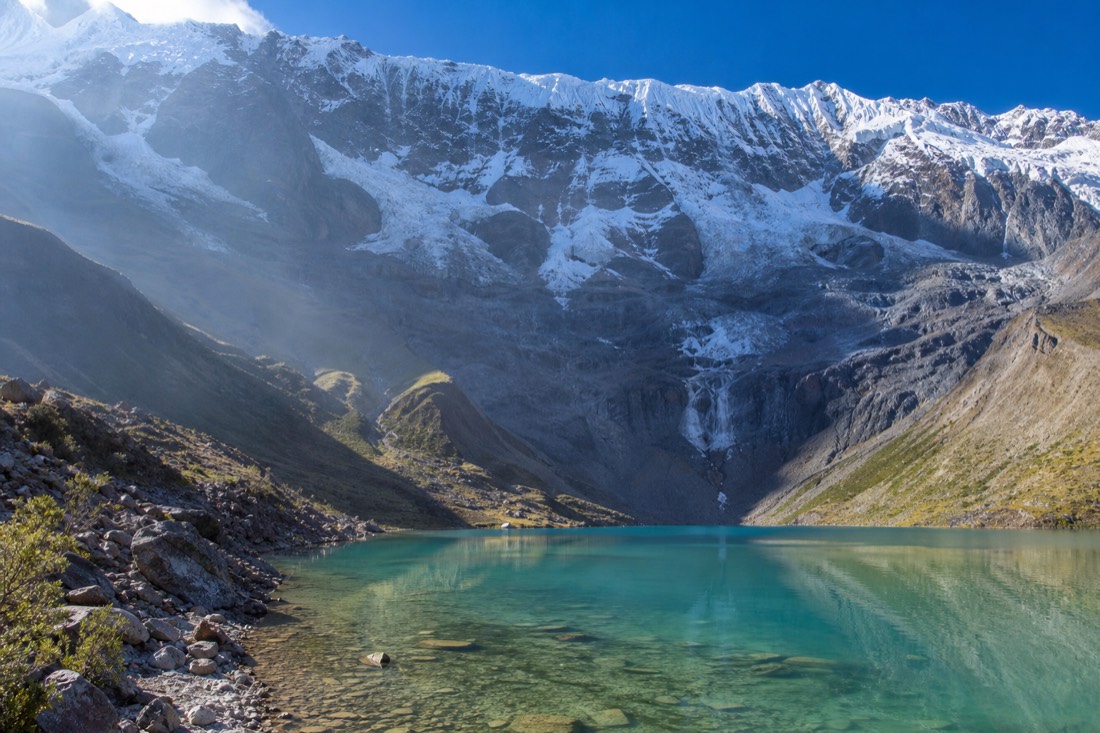
Operators know this pattern, and recent early-departure listings state the reasons outright: beating the crowds and catching the clearer morning weather window. Afternoon at altitude means stronger wind that ripples the lake and flattens its colour, plus rising cloud in every month and real storm risk in the wet season.
| Cusco departure | At the lake by | Glacier odds | Shore crowds |
|---|---|---|---|
| 3:30-4:00 AM | ~9:00-10:00 AM | Best of the day | Lightest |
| 5:00-6:00 AM | ~11:00 AM-12:00 PM | Still decent | Building fast |
| 8:00 AM or later | ~1:00-2:00 PM | Weakest, wind and cloud | Peak, then thinning |
This timing is the main reason I steer people toward the small-group dawn departure instead of improvising: book the Humantay Lake day trip with breakfast and buffet lunch and check live availability and prices on GetYourGuide. Pickup runs 3:30 to 4:00 AM from Cusco's historic centre, hot breakfast comes in Mollepata on the way, and you reach the water inside the good window.
Are the shoulder months a smart trade?
Often, yes. April, May, September and October trade a small weather risk for real gains: thinner crowds, greener valleys, softer light and easier booking. May and September behave almost like dry-season months. April and October ask for a flexible attitude and a rain shell, and they reward both.
I like the shoulder months because the mountain feels like itself again. In late September the June crowds are gone, the trail is still firm, and the dawn frost has softened. April adds something the peak season never shows: green slopes below Soraypampa, fattened streams, wildflowers along the lower trail, all left over from the rains.
The trade-off is honesty about odds. In April and October the first or last storms of the wet season wander through, and a given morning can lose the glacier to cloud. Travellers with one fixed day in Cusco should lean toward May through September. Travellers with two or three possible days can pick their morning by the sky and do very well in the shoulders. Either way the early start does not become optional; if anything it matters more, because the clear window shrinks at the edges of the season.
How do crowds change through the year?
They follow the northern-hemisphere summer. June through August is peak, with July the single biggest month for arrivals in Peru, over 308,000 in recent national data. June, September and October each still top 271,000. Come in the wet season, or early on a shoulder morning, and the shore can feel nearly private.
Cusco's tourism year has one big hump. School holidays in Europe and North America, plus the driest skies, push everyone into the same three months, and national tourism statistics show it clearly, with July leading every recent year. The trail feels it: full parking at Soraypampa, conga lines on the steep switchbacks, a busy shoreline from mid-morning. It never reaches the bottleneck chaos of Rainbow Mountain, since the lake basin absorbs people well, but July at 11:00 AM is nobody's postcard.
The good news is that crowd timing is predictable, so you can plan around it. The dawn departure beats most of it in any month, and I collected the rest of my tactics in a separate piece on beating the crowds at Humantay.
How do Cusco's festivals and holidays change the trip?
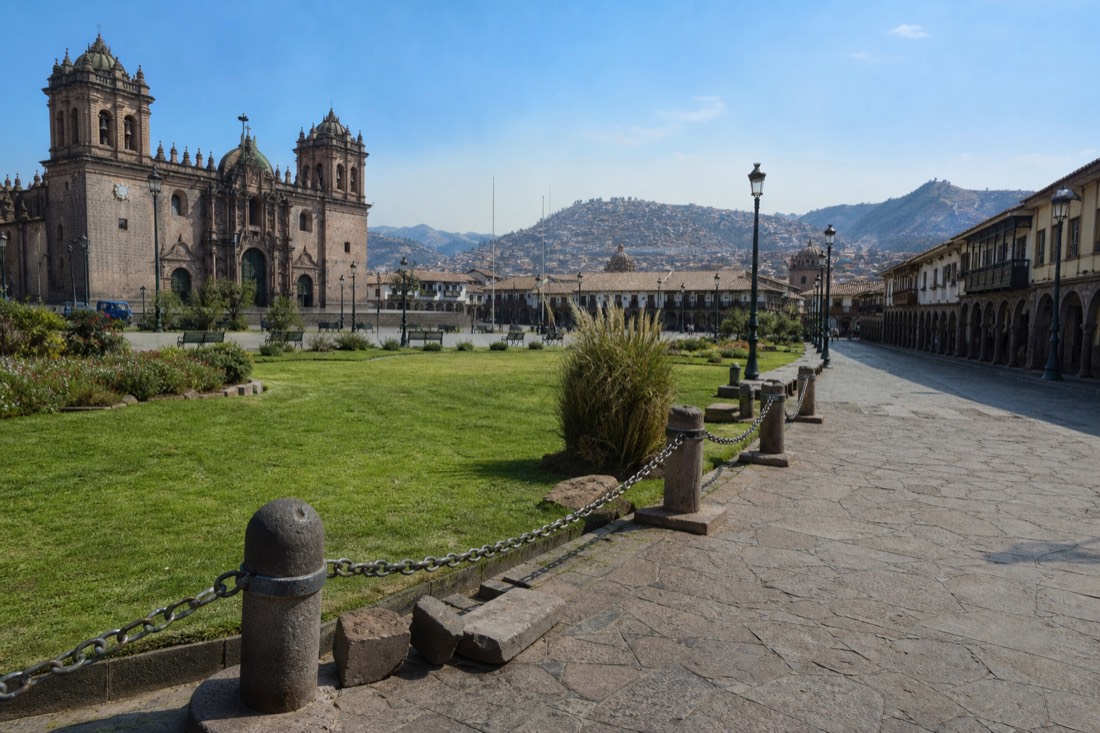
The weather calendar is only half the story; the human calendar matters too. June and July hold Cusco's two biggest crowd magnets, Inti Raymi on the 24th of June and Peru's Fiestas Patrias around the 28th and 29th of July. Add Semana Santa at Easter and the Christmas-to-New-Year stretch, and you have the dates when beds, seats and the trailhead all fill fastest.
Inti Raymi, the Festival of the Sun, is the single busiest day in the Cusco year. The city swells, hotels sell out weeks ahead, and every day trip runs full. The lake itself is no more crowded on the 24th than on any peak-dry-season morning, but getting a seat and a room around it is much harder, so book well in advance if your trip lands in that window. The upside is real: you catch one of the Andes' great spectacles and a flawless dry-season sky in the same visit.
Fiestas Patrias, Peru's independence holiday at the end of July, brings a second surge, this time driven by domestic travellers. Peruvian families take the long weekend and head for exactly the sights you want, so trailhead parking at Soraypampa is at its fullest and the early departure matters more than ever. Semana Santa, the week before Easter, floats between March and April depending on the year and can drop a burst of crowds into what is otherwise a quiet shoulder month. The Christmas and New Year holidays fill Cusco again, though the wet-season skies make the lake a gamble in that stretch.
There is a quieter counterpoint worth naming, and it is where I point most travellers. Outside these spikes, the ordinary dry-season weeks of May, September and early October are the planner's sweet spot: the weather still behaves like the dry season, yet beds, tour seats and trailhead space are far easier to secure than in the festival crush. If your dates are your own to set, aiming for the gaps between the big events buys you the clear skies without the scramble. It is the single easiest way to sidestep both the crowds and the quiet price pressure that rides along with Inti Raymi and Fiestas Patrias, when demand lets operators fill every seat without discounting. A week to either side of those dates feels like a calmer, cheaper trip for the same glacier.
None of these dates ruin the trip, they just change how far ahead you plan. Here is the demand calendar I keep in my head when someone tells me their travel window.
| Peak date or period | Roughly when | Effect on the trip | What I tell people |
|---|---|---|---|
| Inti Raymi | 24 June | City sells out, tours run full | Book beds and seats weeks ahead |
| Fiestas Patrias | 28-29 July | Domestic surge, fullest trailhead | Reserve early, start pre-dawn |
| Semana Santa | Easter week, Mar-Apr | Short crowd burst in a quiet month | Check the year's exact dates |
| Christmas and New Year | Late Dec-1 Jan | Cusco full, wet-season skies | Go for the city, gamble on the lake |
| Ordinary dry-season week | May, Sep, Oct | Busy but bookable | The easiest time to plan around |
How I would pick a date if I were flying in myself
If I were booking my own trip from scratch, I would aim for the back half of September or the middle of May, start the lake day before dawn, and give myself a spare morning in Cusco as insurance. The month sets your odds; the number of flexible days you hold decides how safely you can chase a clear sky.
I have guided this day trip since 2022, through blazing June mornings and grey February ones, and the pattern I trust most is simple: the shoulder edges of the dry season give you nearly all of June's clarity with a fraction of its crowds. Late September is my personal favourite. The peak-season coaches have thinned, the trail is still firm and dusty rather than muddy, and the dawn frost has softened just enough to make the pre-dawn start bearable. Mid-May runs a close second, with snow still fresh on the peaks after the rains.
One more habit separates a smooth shoulder-month trip from a frustrated one: watch the forecast, but trust the mountain's daily rhythm over any app. Cusco's weather services struggle to model a single high valley, and I have seen a predicted washout hand us a flawless dawn while a promised clear day clouded over by nine. The rule that holds in every month is that early is clearer, wind and cloud build through the day, and the glacier shows itself best before the plain warms up. So I book the first departure I can get, keep a spare morning in hand when the trip allows it, and treat the forecast as a loose hint rather than a verdict. The travellers who fight this rhythm are the ones who come home with grey photos and a story about bad luck.
If you pressed me to rank the two sweet spots, I would give late September a slight edge over May. Both deliver firm trails and clear mornings, but by September the peak-season coaches have genuinely thinned, whereas May is still ramping up as the dry season announces itself. May's reward is the fresh snow the last rains leave on the high peaks, which photographs beautifully above the turquoise. September's reward is simple space at the shore. Pick May for the scenery on the summits, September for elbow room at the water, and you will be happy with either.
The bigger lever most travellers ignore is flexibility. One fixed day in Cusco is a very different bet from three loose ones. With a single locked morning you should lean hard into May through September, when the odds of a clear glacier are highest, and accept that even then a rare cloudy dawn can happen. With two or three possible mornings you can read the sky, wait out a bad one, and do beautifully even in April or October. This is the framework I give friends.
| Days you can flex in Cusco | Safest months to target | How I would play it |
|---|---|---|
| One fixed morning | June to September | Highest clear-sky odds, book early, no wiggle room |
| Two or three mornings | May, September, October | Pick your clearest dawn by the forecast |
| A flexible week | April to October | Read the sky daily, dodge crowds and cloud |
| No choice, wet-season trip | Nov-April | Go on the first clear-ish morning you get |
Then there is the pack, which changes more by season than people expect. The temperature swing at Soraypampa barely moves, days near 14°C and nights around 2°C all year, but the difference between a dry-season frost and a wet-season storm decides your footwear and your rain layer. This is the split I brief every group on.
| Kit | Dry season (May-Sep) | Wet season (Nov-Apr) |
|---|---|---|
| Footwear | Grippy trail shoes, dusty trail | Waterproof boots, real mud |
| Traction | Not usually needed | Helpful on slick rock |
| Rain shell | Pack it anyway, wind chill | Essential, expect a soaking |
| Warm layers | Freezing dawns, hot sun by nine | Milder but damp, chill lingers |
| Sun protection | Fierce UV, hat and high SPF | Still strong through thin cloud |
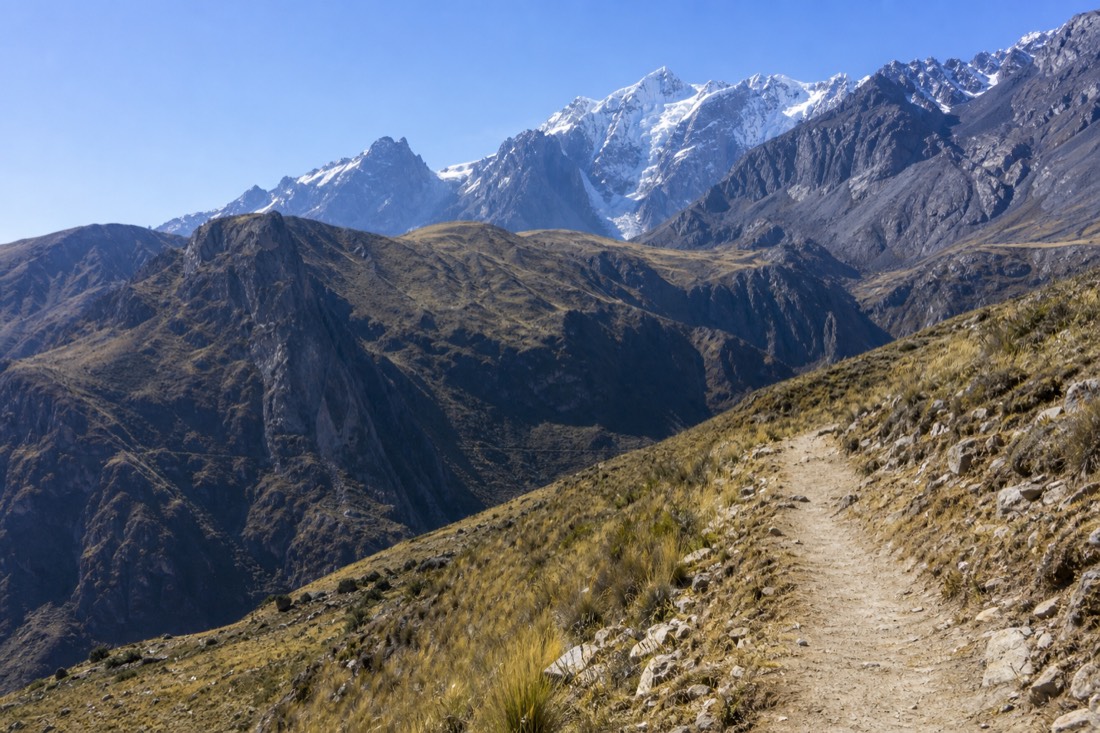
Whatever month you land in, hold one thing constant: go early. The clear window is widest at dawn in every season, and it shrinks fastest at the edges of the calendar, which is precisely when the shoulder-month gamble is won or lost. I gathered the rest of my low-season tactics in the piece on beating the crowds at Humantay, and the wet-season reality check in the day the lake was grey.
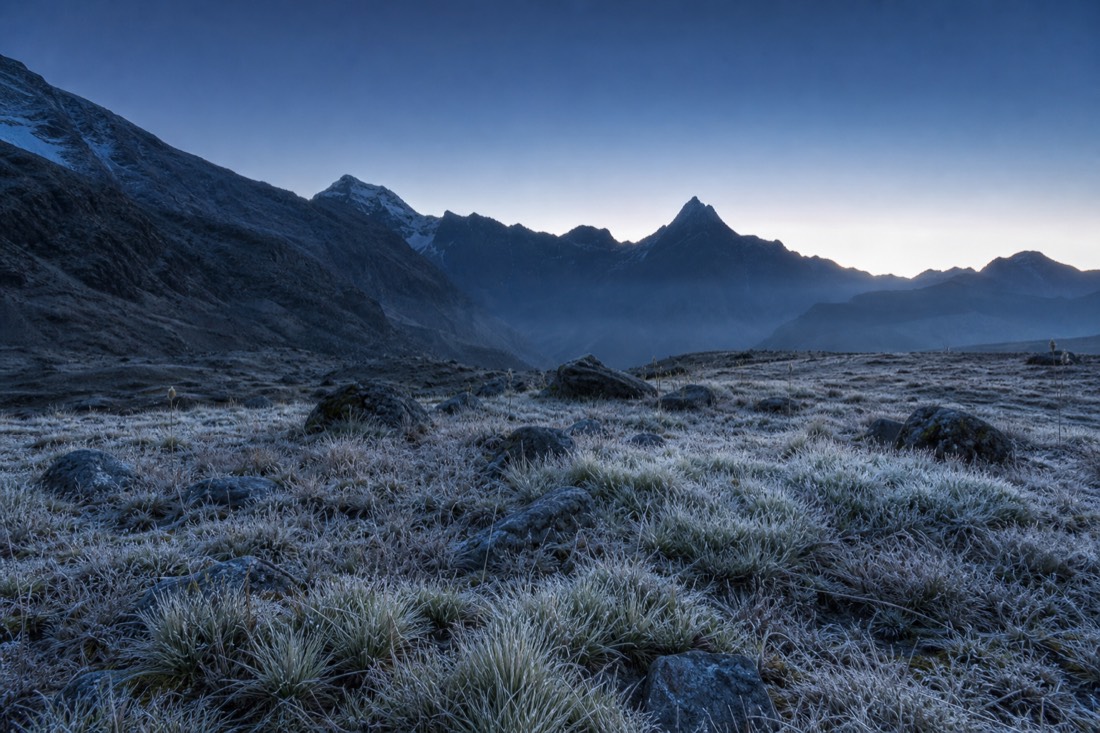
So, the short version I would give you at the trailhead: pick May or September if you can, June to August if you must, mornings always. The lake rewards people who meet it early. The 3:30 AM alarm hurts for about twenty minutes, and then the glacier shows up clear above turquoise water and you forget the alarm ever rang.