Can You Swim in Humantay Lake?
The short answer is no, and the reasons run deeper than a rulebook. Here is why the water is off limits, and what the shore offers instead.
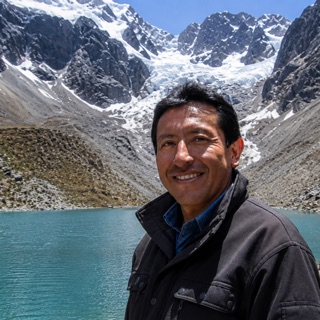 Written with Carlos Mamani, Humantay Lake tour guide & high-altitude specialist
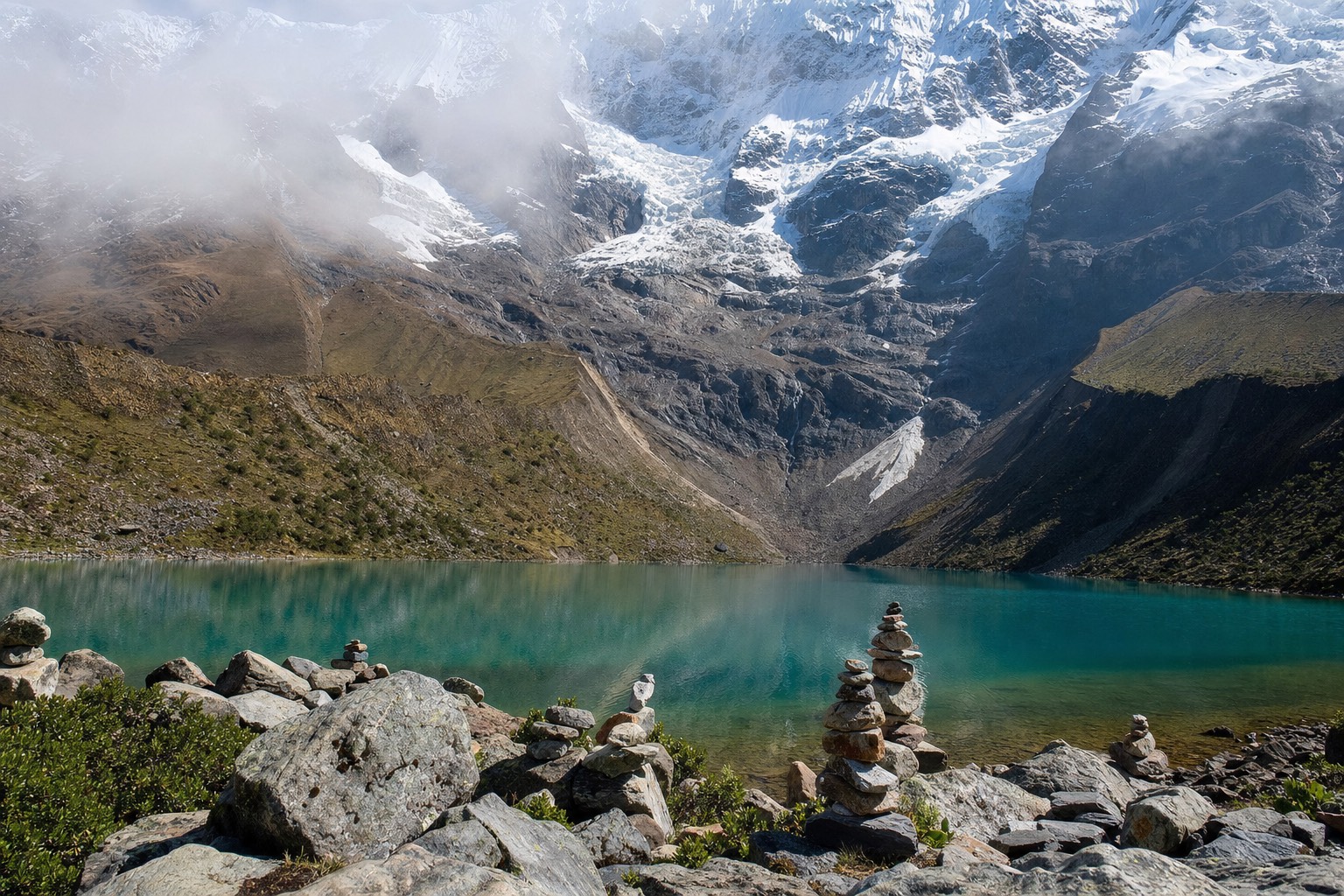
Short answer
No. Swimming or entering Humantay Lake is prohibited. The lake is sacred to local Quechua communities, who honour the mountain above it as an Apu, and it serves as a protected water source. The water is also glacier meltwater near freezing, genuinely dangerous at 4,200 m. Enjoy the shore; stay out of the water.
Every few weeks someone at the shore asks me, half joking, whether they can at least dip their feet. I understand the impulse. The water is the most inviting colour nature produces, you have just climbed a steep hour and a half to reach it, and it sits there glittering like an infinity pool built by a glacier. The answer is still no, and it is the least negotiable no on this entire trip.
What I want to do here is explain the no properly, because the reasons are better than a sign on a post. They involve a mountain that local families consider a living being, a valley that drinks this water, and physics that would put a swimmer in serious trouble within minutes.
Is swimming allowed in Humantay Lake?
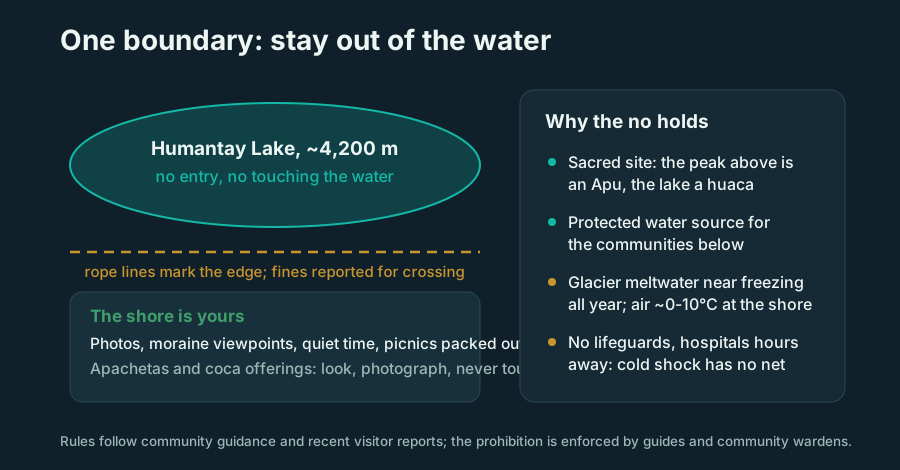
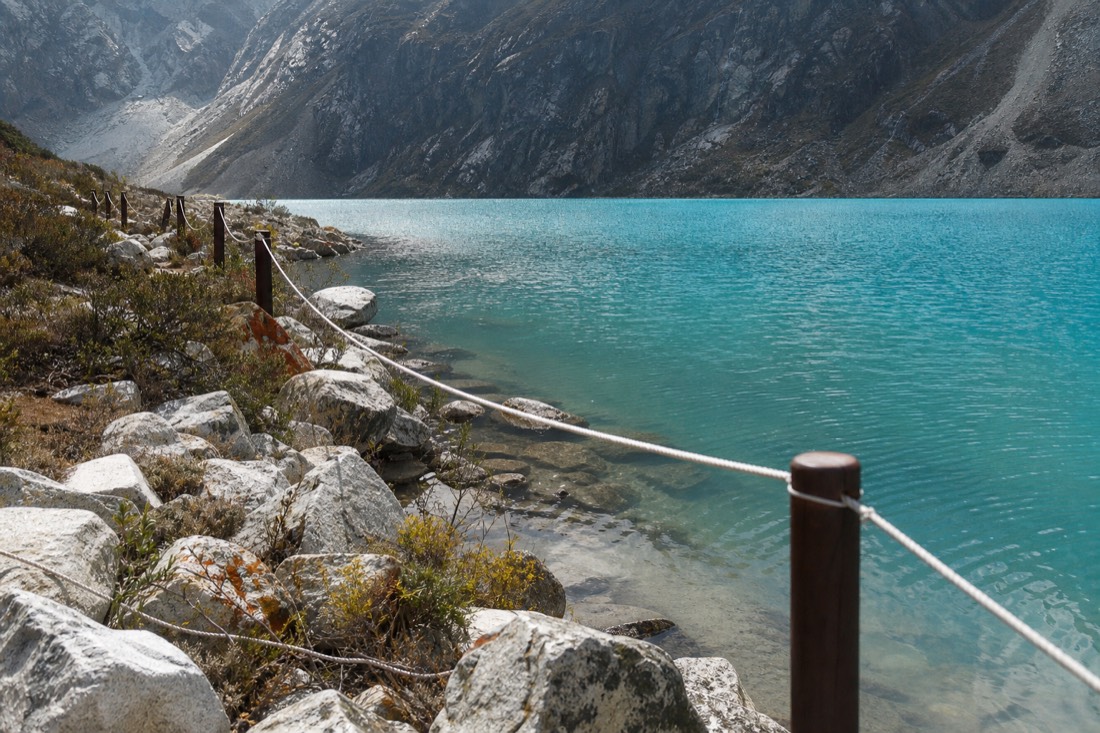
No. Entering the water is prohibited, full stop. The lake is a sacred site for the surrounding communities, a protected natural area, and a water source for the valley below. Guides enforce the rule, visitors have reported fines for breaking it, and rope lines along the busiest stretch of shore mark the boundary plainly.
This is not one of those soft rules that locals wink at. The communities of the Mollepata district administer access to the lake, collect the entrance fee at the checkpoint, and take the condition of the water personally, because it is theirs in every sense: spiritually, legally and practically. Every guide working this trail briefs the rule before the shore, and every operator repeats it.
Here is the shoreline rulebook at a glance, as I give it to my own groups.
| At the shore | Allowed? | Why |
|---|---|---|
| Photos, from every angle | Yes | The whole point |
| Sitting, resting, picnicking (pack out everything) | Yes | Leave nothing, not even fruit peel |
| Touching or entering the water | No | Sacred site, protected water source |
| Swimming or wading | No | Prohibited outright, fines reported |
| Disturbing offerings or cairns | No | These are religious objects, not decor |
| Walking past rope barriers | No | They mark the protected edge |
Notice how short the forbidden list really is. The rule does not shrink your visit. It asks one thing: admire the water from the ground beside it.
Why is the lake sacred?
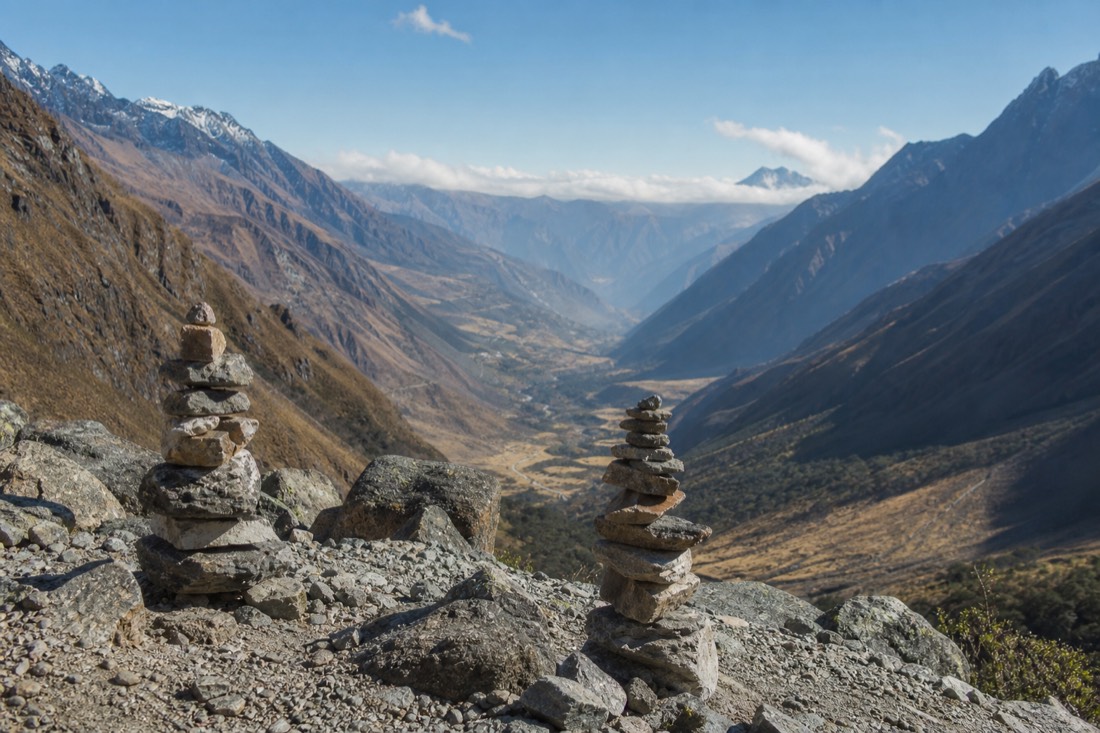
In Andean cosmovision the great peaks are Apus, living mountain spirits that protect the communities below them. Humantay peak is one, and its lake is treated as a huaca, a sacred place. Families leave coca leaves at the shore, shamans hold ceremonies for Pachamama here, and stone cairns called apachetas stand as accumulated prayers.
This is a living religion, not a heritage display. The Salkantay massif next door is among the most venerated Apus in the entire Cusco region, and Humantay shares that spiritual geography. When my grandmother's generation crossed these passes, they added a stone to the apachetas and spoke to the mountain directly. Plenty of Cusco families still do.
At the shore you will see the physical evidence: small bundles of coca leaves tucked between stones, the cairns clustered on the moraine, sometimes the remains of a pago a la tierra, an offering ceremony. Treat all of it as you would treat objects on an altar, because that is what they are. Look, photograph respectfully from a step back, touch nothing. I wrote a longer piece on what these offerings mean and how they got there in offerings and apachetas at the shore.
Swimming in a huaca, in this worldview, is roughly what diving into a baptismal font would be elsewhere. That is the cultural half of the prohibition. The practical half is just as firm: this basin feeds the drinking water of communities downhill, and human contact, sunscreen, sweat and all, degrades it. Sacred and municipal interests point the same direction here, which is why the rule holds so absolutely.
How cold is the water, and why is that dangerous?
It is glacier meltwater, hovering near freezing all year even when the sun feels warm. Cold-water immersion at that temperature triggers involuntary gasping and rapid loss of muscle control within minutes, and at 4,200 m your body is already oxygen-stressed. A casual swim here is a genuine emergency, not a polar plunge.
People underestimate this because the setting confuses their instincts. Strong Andean sun, a beautiful colour, a calm surface: it reads as swimmable. But the lake is fed directly by the hanging glacier of Humantay peak, which rises past 5,470 metres, and meltwater does not warm up in a basin this high, where air temperatures typically swing between roughly 0 and 10 degrees.
| Factor | The number | What it does to a swimmer |
|---|---|---|
| Water temperature | Near freezing year-round | Gasp reflex, then rapid loss of coordination |
| Altitude | ~4,200 m | Less oxygen for a body already in shock |
| Air temperature at the shore | ~0-10°C | Rewarming after exit is slow and hard |
| Help | Hours from a hospital | No lifeguards, thin margins for rescue |
Add those rows together and you see why guides treat the water line so seriously. Cold shock plus altitude plus remoteness is a stack of risks with no safety net under it. The same climb that made the lake feel earned also put you far from help. My safety guide covers the rest of the trail's risk picture, but the lake itself is the simplest entry on the list: stay out and the danger is zero.
What can you do at the shore instead?
Plenty, and most visitors find the hour up there too short. Walk the moraine viewpoints for different angles on the colour, watch and listen to the glacier, photograph the apachetas, sit with coca tea from your thermos, or simply breathe at the shore of one of the most beautiful basins in the Andes.
The shore rewards slowness. Groups that sprint to the waterline, snap the same photo forty times and turn around miss the best of it. Here is how I coach guests to spend a typical 45 to 60 minutes.
| Shore activity | Time | Tip |
|---|---|---|
| Main shoreline photos | 10-15 min | Arrive early, the light and calm water peak in the morning |
| Climb the moraine ridge viewpoints | 15-20 min | The elevated angle shows the full turquoise gradient |
| Glacier watching | 10 min | Sit still; on warm mornings you can hear the ice crack |
| Quiet time, snack, thermos | 10-15 min | The memory that lasts longest, in my experience |
Photographers, note that the elevated moraine shots are the ones you have seen online; the water-level angle mutes the colour. Morning light is your friend and so is an early departure, which the featured tour is built around.
How do you behave respectfully at a sacred lake?
Follow your guide's lead, stay on the marked paths and outside the rope lines, pack out every scrap you brought, leave offerings and cairns exactly as you find them, and keep noise low. You are a guest at someone's shrine and reservoir at once. Respect here is mostly quiet common sense.
None of this requires ceremony from you. Local communities do not expect visitors to share their beliefs, only to avoid trampling them. The practical translation is short: no litter of any kind, no dismantling or kicking over apachetas, no moving coca bundles for a cleaner photo composition, nothing that treats the site as a prop. If a ceremony is under way when you arrive, give it space and photograph people only with permission.
Speaking honestly, the visitors who embrace this tend to have the better morning. The lake is not an attraction you consume, it is a place you meet, and meeting it on its own terms, cold, sacred, luminous, is what people remember on the flight home. Whether the whole trip earns its early alarm is a fair question, and I answer it with both hands on the table in is Humantay Lake worth it.
If you want the visit handled the right way from the start, with a guide who briefs the customs, both meals included and an early arrival before the crowds, book the Humantay Lake day trip with both meals included and check live availability and prices on GetYourGuide. The listing carries 4.8 stars across 3,809 GetYourGuide reviews, and free cancellation runs to 24 hours before departure.
So no, you cannot swim in Humantay Lake, and after an hour at the shore I suspect you will not want to. Some water is for entering. This water is for standing beside, slightly out of breath, wondering how a colour like that got all the way up here.
The question I get at the water's edge, and how I answer it
Someone asks almost every trip, usually half joking, whether they can just dip a hand or a foot. My answer is always the same and always immediate: no, and not because a sign says so. The prohibition rests on three separate pillars, and any one of them alone would be enough to keep you out of the water.
I brief the rule before we reach the shore, not at it, because the water is genuinely persuasive up close and I would rather nobody has to test their willpower with cold turquoise glittering a metre away. When the question comes anyway, I lay out the reasons in plain terms, because a rule you understand is one you keep, and a rule you resent is one you break the moment the guide looks away.
How I answer matters as much as the answer itself. Meeting an eager traveller with a flat rulebook refusal just leaves them feeling scolded on a morning they worked hard for. So I turn it into the story it deserves: whose mountain this is, where the water actually goes, and what the cold would do to a body up here. By the end almost nobody is disappointed, because they have swapped a small thwarted impulse for something more interesting than a swim, which is understanding where they are standing.
I lean on the sacred-place comparison because it lands even for visitors who are not religious themselves. You do not have to share a belief to respect that a spot is holy to the people who live beneath it. When my grandmother's generation crossed these passes, they added a stone to the cairns and spoke to the mountain by name, and plenty of Cusco families still climb here to leave coca leaves and hold a pago a la tierra. The offerings you photograph are not folklore staged for tourists; they were left that week, by someone who meant them.
The first pillar is spiritual. To the Quechua communities here the peak above is an Apu, a living mountain spirit, and its lake is a huaca, a sacred place. Entering it is not like ignoring a "keep off the grass" sign; it is closer to wading into a font during a service. The second pillar is practical and municipal: this basin feeds the drinking water of the valley below, so sunscreen, sweat and skin oils are pollutants in a supply that has no treatment plant. The third is physical, and it is the one that could hurt you personally within minutes.
I keep this framing because it moves people in a way a bare prohibition never does. When someone sees that the same "no" protects a community's shrine, a community's water, and their own body all at once, the impulse to test it simply drains away. The deeper story of the offerings and cairns you will see around the shore lives in my piece on offerings and apachetas at the shore, and the wider trail risks in the safety guide.
Enforcement is real, not decorative. Community wardens and guides watch the shore, rope lines mark the protected edge along the busiest stretch, and travellers have reported fines for stepping past them into the water. Honestly, though, the fine is the least of the reasons to stay out. Long before any warden reaches you, the cold and the altitude will have made the point far more persuasively than a receipt ever could.
And no, dipping only your feet is not a loophole. The rule is not about how much of you goes in, it is about the water being touched at all, by skin, by sunscreen, by the example it sets for the next hundred people who watched you do it. Feet in near-freezing glacier water at altitude will also hand you a fast, unpleasant lesson in why the whole idea is worse than it looks.
| The pillar | What it protects | Why it is non-negotiable |
|---|---|---|
| Sacred site | An active Andean shrine, a living huaca | Entering desecrates it for the communities who hold it holy |
| Water source | Drinking water for the valley below | Human contact contaminates an untreated supply |
| Physical danger | Your own body at 4,200 m | Cold shock plus altitude plus distance from help |
How does cold-water shock unfold at this altitude?
Fast, and worse than at sea level. Glacier meltwater near freezing triggers an involuntary gasp the instant you go in, then steals muscle control within a few minutes. Stack that on air already holding about 60 percent of sea-level oxygen, and a casual dip becomes a genuine emergency in a place hours from any hospital.
People underestimate this because the scene lies to their instincts. Bright Andean sun, a calm surface, an unreal colour: it all reads as swimmable. But the water is fed straight off the hanging glacier and does not warm in a basin this high, where the air itself typically sits between roughly zero and ten degrees. The body's response to sudden cold immersion is not a matter of toughness or willpower. It is a reflex, and it follows a grimly predictable order.
The reason the water never warms is worth understanding, because it is why the danger is constant rather than seasonal. A lake fed directly by a hanging glacier is topped up all day with meltwater a few degrees above freezing, and at 4,200 metres the thin, cold air never banks enough heat to warm the basin. Midday sun on your face is deceptive; six inches under the surface it is effectively winter, every day of the year. The colour you are admiring is quite literally powdered glacier suspended in that meltwater, which should tell you plenty about the temperature.
| Roughly when | What cold water does to the body |
|---|---|
| First seconds | Involuntary gasp and rapid, uncontrollable breathing |
| First 1-2 minutes | Breathing races, panic sets in, the head goes under easily |
| Within minutes | Hands and limbs lose strength and coordination |
| After exit | Rewarming is slow and hard in near-freezing air |
At altitude every one of those rows gets worse. Your blood is already carrying less oxygen, so the gasp reflex and the panic hit a system with no reserve, and the muscle failure that would strand a swimmer arrives sooner. There is no lifeguard, no warm building, and the nearest hospital is hours down a rough road. The same climb that made the lake feel earned also placed you far beyond quick rescue.
Cold-water shock alone strands strong swimmers in temperate lakes every single year. Layer the altitude on top and the ordinary danger turns acute: the gasp reflex fires into lungs already short of oxygen, the panic hits a brain running lean, and the muscle failure that ends swims arrives faster because there is simply less fuel to burn. A plunge a fit person might shrug off at a sea-level lido is, at 4,200 metres and near-freezing, a stacked emergency with no soft landing beneath it.
Picture what a rescue here would actually involve. No lifeguard, no warm hut, no road to the water's edge. Anyone in trouble would have to be hauled out by hand by people already breathing hard at altitude, warmed with whatever layers the group happens to carry, then walked or ridden back down to a vehicle and driven hours to the nearest hospital. The two things that make cold-water incidents survivable elsewhere, fast help and a warm building, do not exist at this shore.
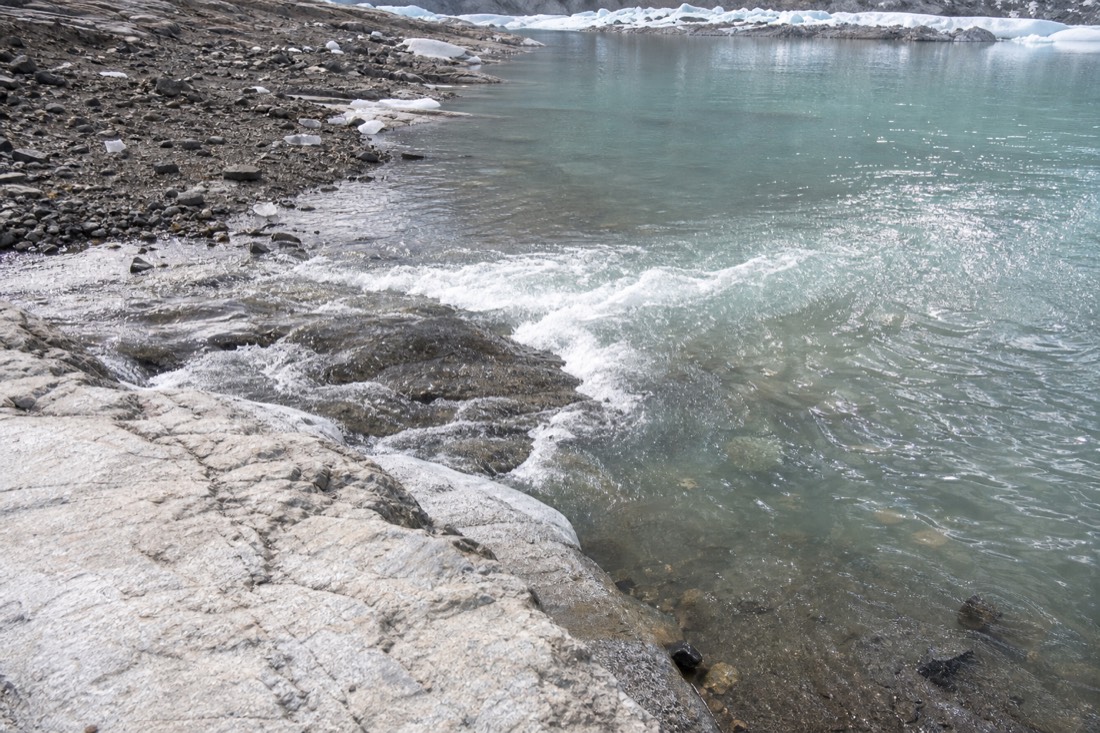
There is a quieter cost to contact that has nothing to do with your safety. Every swimmer brings something the lake and the valley below would rather not receive, and because the water is destined for drinking, those small inputs matter more here than they would at a resort pool. Multiply one careless dip across the thousands who visit and the harm stops being hypothetical.
The water-source point deserves more than a passing line, because it is easy to wave away as somebody else's problem. This basin is not a wilderness curiosity; it is part of the working water supply for communities down the valley, and there is no treatment plant between the lake and a family's tap. Every input a swimmer leaves behind, sunscreen, lotion, the ordinary bacteria of skin, enters that supply untreated. What feels like a harmless private moment at the shore becomes, at the scale of thousands of visitors a year, a real question of whether the people here can keep drinking their own water safely.
| A swimmer introduces | The effect it has |
|---|---|
| Sunscreen and skin oils | Contaminates water headed for drinking use |
| Disturbed sediment | Clouds the rock-flour colour people climb for |
| Sweat and bacteria | Degrades a source with no treatment below |
| A broken precedent | Every "just me" multiplies across the crowds |
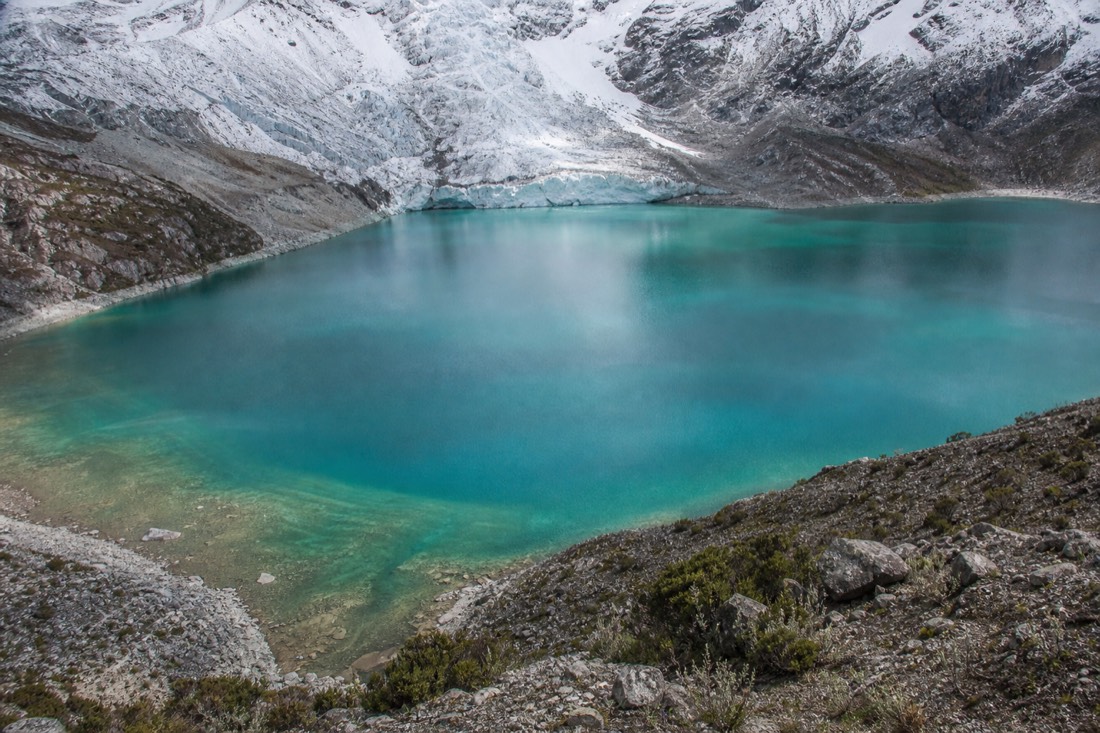
Put the three pillars together and the rule stops feeling like a restriction and starts feeling obvious. You protect a shrine, a water supply and your own body with a single easy act: admire the lake from the rock beside it. In my experience the visitors who take that spirit on board, rather than resenting it, are the ones who leave with the better morning and the story worth telling at home.