Is Humantay Lake Worth It?
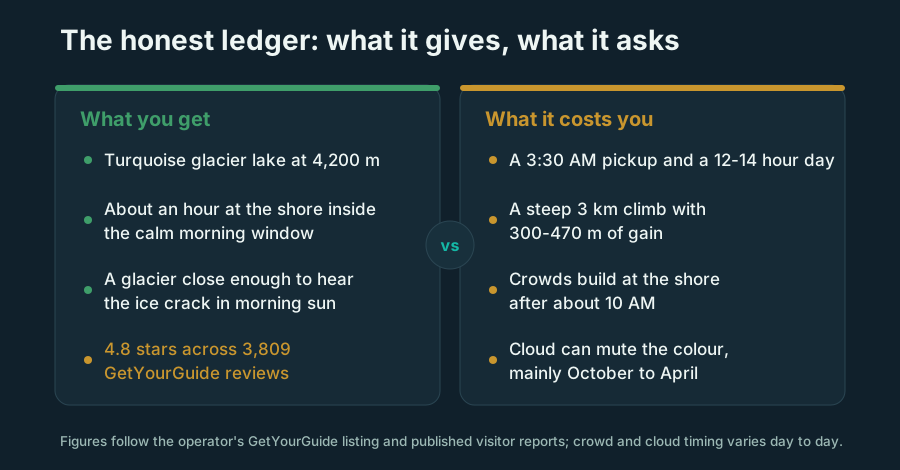
I have stood at that shore in perfect turquoise light and in flat grey cloud. Here is the honest ledger: what the trip gives, what it costs you, and who it is really for.
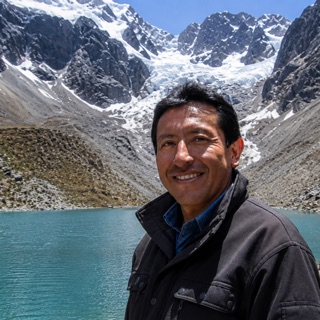 Written with Carlos Mamani, Humantay Lake tour guide & high-altitude specialist
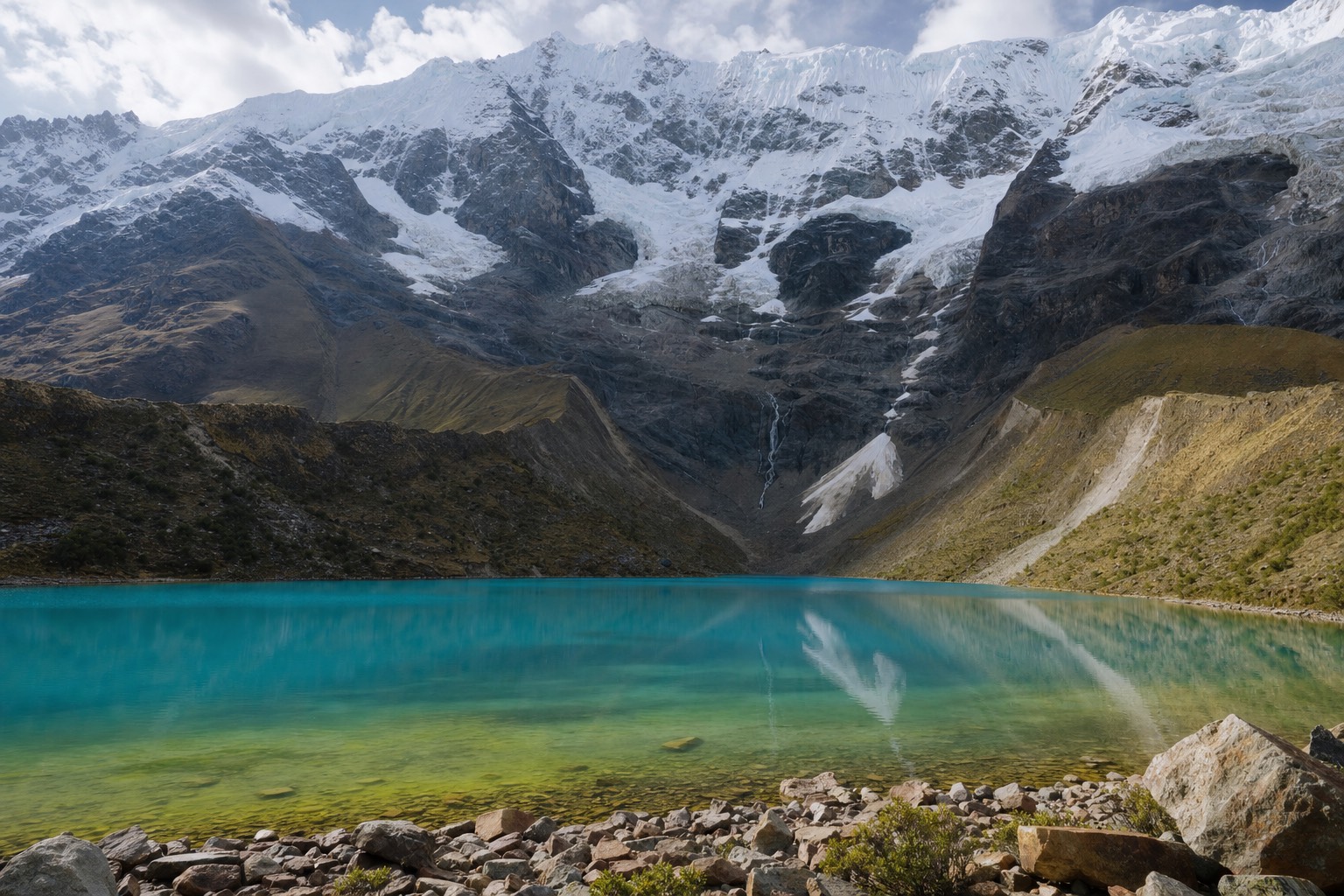
Short answer
For most travellers, yes. A glacier-fed turquoise lake at 4,200 m, reached by a short, steep hike, is one of the strongest single-day sights in the Cusco region. The costs are real: a 3:30 AM start, a hard climb, midday crowds and occasional cloud. Skip it if you are unacclimatized or hate early starts.
There is a moment on this trip that decides the whole argument. You come over the moraine lip, lungs burning, and the water appears all at once: an improbable turquoise disc under a wall of glacier, close enough that you can hear the ice crack in the morning sun. I have watched hundreds of people crest that lip since 2022. Some cry. Some just sit down. Nobody scrolls their phone.
And yet I will not tell you the answer is an automatic yes, because I have also stood there in cold grey cloud with sixty other people asking where the turquoise went. So let us do this honestly, cost by cost and reward by reward.
What do you get for a 3:30 AM alarm?
A full Andean day compressed into fourteen hours: a dawn drive through the Limatambo valley, a hot breakfast in Mollepata, a short hard hike, the lake at its calmest and clearest, a buffet lunch on the way home, and an evening return to Cusco. The alarm hurts once. The light it buys you lasts all morning.
The early start is not a tour-industry quirk, it is the whole strategy. Mornings at the lake are calmer, clearer and emptier; afternoons bring wind, building cloud and the day's biggest crowds. Departing Cusco between 3:30 and 4:00 AM puts you on the trail before the heat and at the shore before the rush.
Here is how the day actually unfolds on the featured departure, hour by hour.
| Time (approx.) | What happens | Why it matters |
|---|---|---|
| 3:30-4:00 AM | Pickup in Cusco's historic centre | Sleep in the van, most people do |
| ~6:00 AM | Hot breakfast in Mollepata | Fuel for the climb, vegetarian option available |
| ~7:30 AM | Reach Soraypampa trailhead (~3,900 m) | The rough final road stretch ends here |
| 7:30-9:30 AM | Hike up, 3 km, 300-470 m of gain | The hard part, 1.5-2 h at a sane pace |
| 9:30-10:30 AM | Time at the lake | The calm window, before the big wave arrives |
| ~11:30 AM | Walk down, drive to Mollepata | Descent takes about an hour |
| ~1:00 PM | Buffet lunch | You will have earned it |
| ~5:00-6:00 PM | Drop-off near Plaza de Armas | Evening free in Cusco |
Read that middle stretch again: you get roughly an hour at one of Peru's most photographed places inside its best light window. That is what 3:30 AM purchases, and I think it is a fair trade.
Is the lake really that colour?
Yes, and no filter is involved. The turquoise comes from glacial rock flour, stone ground to powder by the glacier above and washed into the lake, where the suspended particles scatter light toward blue-green. The colour shifts with sun, season and cloud, from pale mint to deep saturated teal.
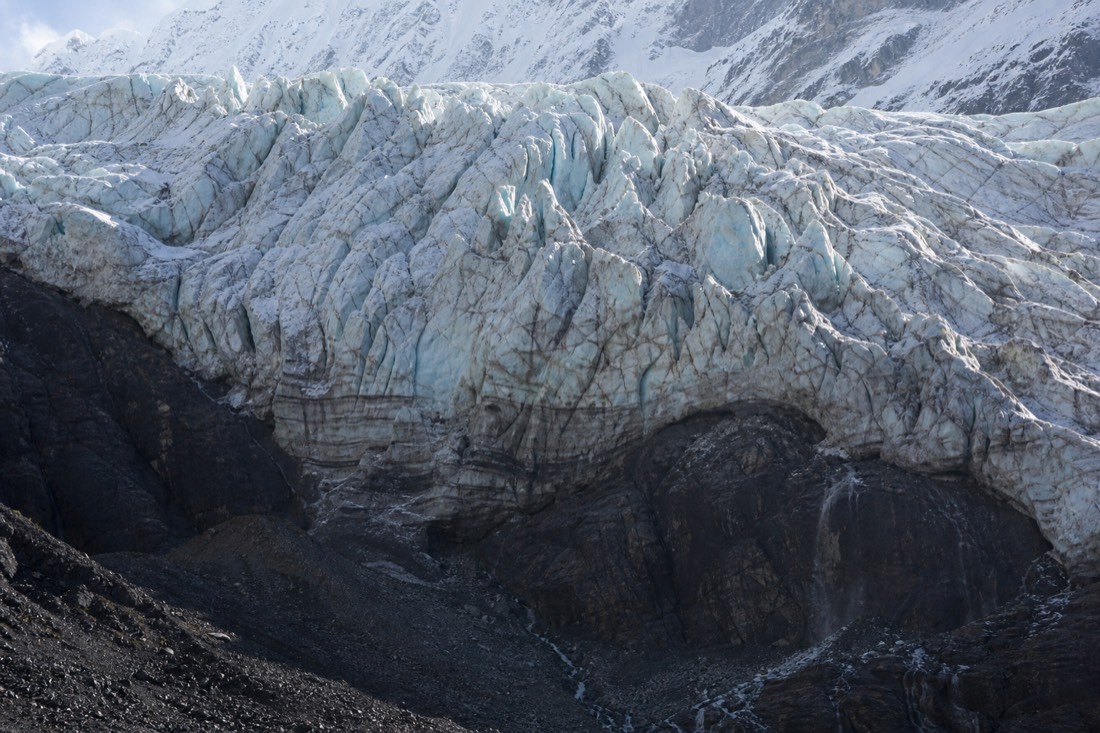
The physics is honest, which is why the colour survives scrutiny in person. Meltwater from the hanging glacier on Humantay peak, a 5,470-metre neighbour of the great Salkantay, carries that fine rock dust down into the basin all summer. More sun means more visible colour; flat overcast mutes it toward slate.
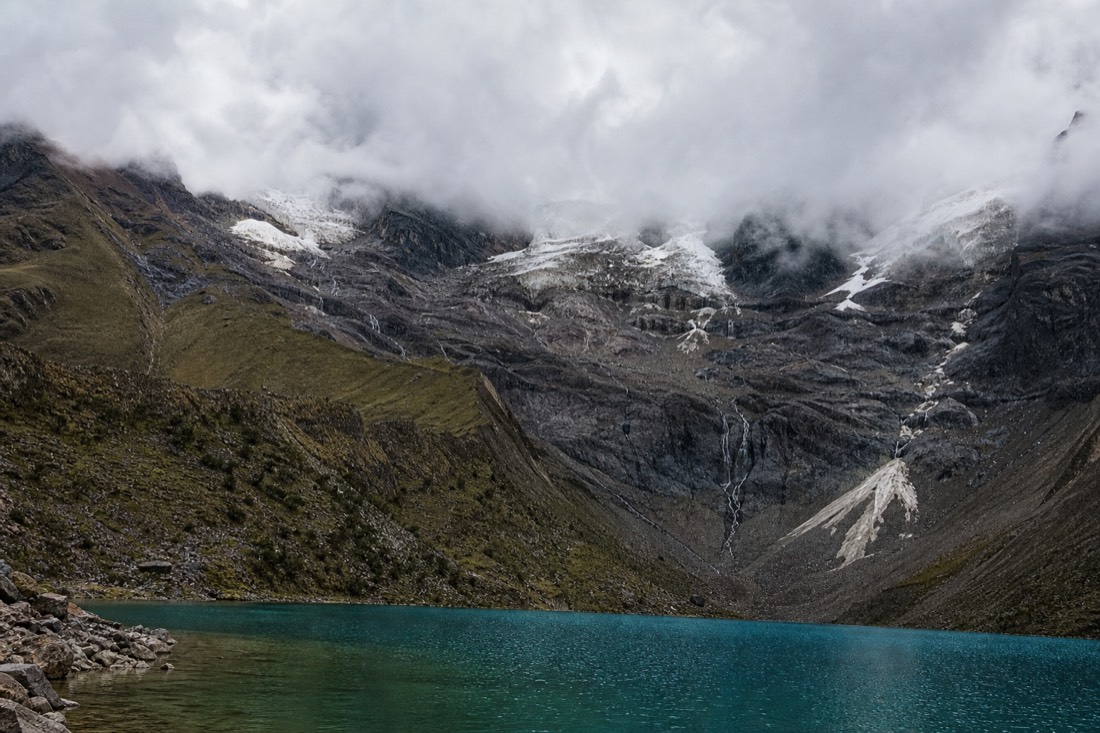
That variability is the caveat inside the postcard. On a clear dry-season morning the water looks unreal, better than the photos. Under heavy cloud it can read as an ordinary alpine lake, still handsome, no longer supernatural. The glacier and the amphitheatre of rock around it stay impressive in any weather, which is what rescues the grey days.
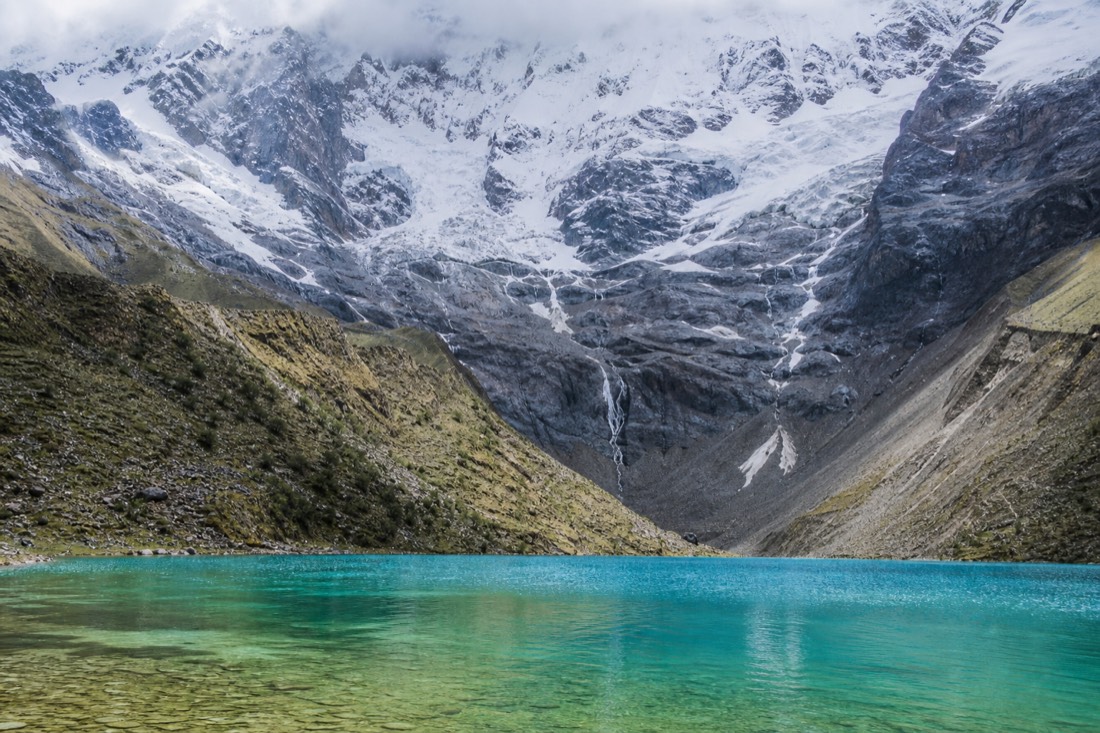
If the colour is the main reason you are going, stack the odds: dry season, early departure, and a backup day in your itinerary if you can spare one.
What are the honest downsides?
Three real ones: a steep climb at 4,200 m that humbles unacclimatized visitors, a midday crowd wave that transforms the shore from serene to busy, and weather that can hide the famous colour behind cloud, especially from October to April. None are dealbreakers. All are managed by timing and preparation.
I would rather overstate these than have you meet them unprepared.
| Caveat | How bad is it really | The fix |
|---|---|---|
| The climb | Hard for the unacclimatized, fine for the prepared | Two days in Cusco first, slow pace, horse fallback |
| Crowds | The shore gets genuinely busy late morning | Early departure, be on the trail by 7:30 AM |
| Cloud risk | Real in rainy season, occasional even in dry | Go May-Sep if the colour matters most to you |
| The drive | 3-3.5 h each way, last stretch rough and unpaved | Sleep, snacks, motion-sickness tablets if prone |
The crowd point deserves numbers. Recent visitor reports describe the shore getting chaotic after about 10 AM as the main wave of day tours lands. Early groups get the lake nearly to themselves for a spell; late arrivals share it with hundreds. Same lake, two different experiences, decided entirely by departure time.
The climb itself is short but honest, 3 km up steep rocky switchbacks. If you are wondering whether your legs and lungs are ready, the hike difficulty guide gives you the full picture, including the 80-sol horse fallback.
Who should skip Humantay Lake?
Anyone who landed in Cusco yesterday, travellers with respiratory, cardiac or serious mobility issues, people who cannot face a 3:30 AM start, and pregnant women, whom the operator itself excludes. If wild scenery without effort is the goal, the Sacred Valley delivers more comfort for less oxygen debt.
That first group is the one I actually argue with at briefings. Landing at 3,400 metres and hiking to 4,200 the next morning is how most bad Humantay stories begin. If your itinerary is that tight, swap the days around, the lake will still be there after you have acclimatized. My acclimatization guide shows exactly how to structure the two days.
There is also a quieter category: people who have seen many glacial lakes. If you have hiked the Rockies, Patagonia or the Alps extensively, Humantay is a beautiful familiar rather than a revelation, and you might weigh it against something you cannot see elsewhere. For most first-time visitors to the Andes, though, this is the closest a single easy day gets you to big-glacier scenery.
| Traveller | Verdict | Why |
|---|---|---|
| First-time Andes visitor, acclimatized | Go | Maximum scenery for one day of effort |
| Photographer chasing the turquoise | Go, dry season, early | Light window is everything |
| Just landed in Cusco | Wait 2 days | Altitude will spoil it |
| Mobility, cardiac or respiratory limits | Skip | Operator restrictions exist for good reason |
| Veteran of many glacial lakes | Maybe | Beautiful, but familiar |
| Hates early starts more than loves lakes | Skip | The 3:30 AM alarm is non-negotiable |
Does the reality match the photos?
On a clear morning, honestly, yes, and that surprises people trained by disappointment. The water is that colour, the glacier is that close. What photos hide: the effort of the climb, the cold wind, the crowds outside the frame, and the possibility of cloud. Expectation management is the difference between delight and grumbling.
My own scorecard, after years on this trail: perhaps eight mornings in ten deliver an experience people rate among their best in Peru, and the other two are rescued or lost by expectations. Nobody regrets being fit and early. The regrets belong to the unacclimatized, the late and the unlucky-with-cloud, and two of those three are choices.
If Humantay is still on your maybe list next to the region's other big day trip, my Humantay versus Rainbow Mountain comparison settles that particular fight in detail.
And if you are in, do it the way that stacks every advantage: small group, early pickup, both meals handled, oxygen on the bus. That is exactly what the featured departure offers, so book the Humantay Lake day trip with both meals included and check live availability and prices on GetYourGuide. GetYourGuide shows it at 4.8 stars across 3,809 reviews, with free cancellation up to 24 hours if the forecast turns on you.
Worth it? For the traveller who prepares, emphatically. The lake does not owe anyone a perfect morning, but it pays out far more often than it disappoints, and when it pays, it pays in a colour you will chase for the rest of your travelling life.
The difference between the mornings people rave about and the ones they resent
After years at this shore I can trace almost every disappointed face back to one of three things: arriving unacclimatized, arriving late into the crowd wave, or arriving under thick cloud. The people who rave came fit enough, early, and lucky with weather. Two of those three are choices you make weeks and hours in advance, not gifts from the mountain.
I do not lead the specific departure this site books, but I have stood at this shore through hundreds of mornings since 2022, watching the same story split two ways. The raver comes off the moraine lip at half past nine, lungs strong from a couple of easy Cusco days, into a near-empty basin under a clean dry-season sky. The resenter crests the same lip at eleven, wrecked from landing in Cusco the day before, into a crowd of a few hundred, with cloud flattening the famous turquoise to slate. Same lake, same trail, wildly different flight-home verdicts.
The weather is the one piece you cannot control, and I will not pretend otherwise. Some mornings the cloud simply wins, and the colour you climbed for hides. What you can control is stacking every other card: acclimatize first, so the climb does not wreck you, and go early, so you meet the lake in its calm window before the day-tour buses land. Recent visitor reports say the same thing I do at the trailhead, that the shore turns busy and chaotic after about ten, which is why an early departure is worth more than almost any other decision.
The crowd math is worth spelling out, because it is the lever most in your control. The lake has one narrow calm window, roughly from when the first hikers arrive until the bulk of the day tours land mid-morning. Get there inside it and you share the shore with a scattering of people and the sound of the glacier. Arrive after, and the same shoreline holds a few hundred, with queues at the best viewpoints and a steady hum of voices where there was silence an hour earlier. The featured departure is built around hitting that early window, which is not a marketing flourish, it is the single practical reason the 3:30 pickup exists.
On weather, the honest odds favour the dry season. From May to September the mornings are far more often clear and stable, which is when the turquoise does its full trick. From October to April the same lake hides behind cloud more often, the trail turns to mud, and the colour reads muted even when the rain holds off. If the colour is your whole reason for coming, the calendar is not a detail, it is the decision, and my month-by-month notes in the best-time-to-visit guide lay out exactly how the odds shift across the year.
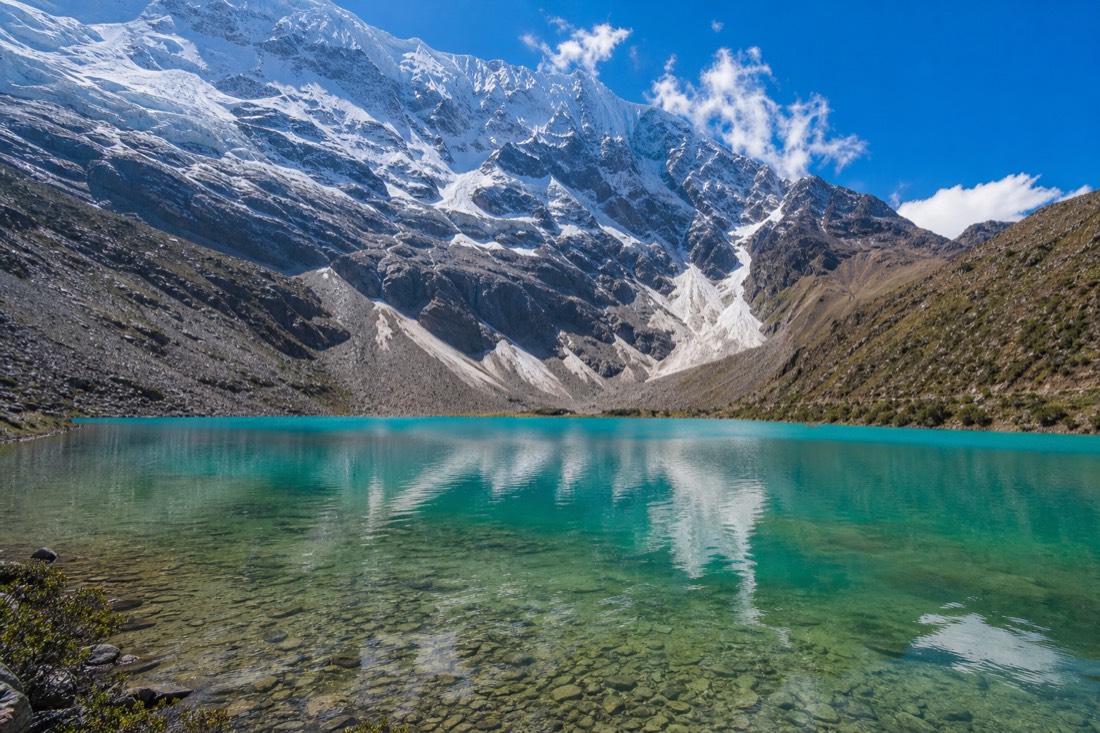
Expectations do the rest of the sorting. The travellers who came for a mountain, a glacier and a hard-won hour of quiet almost always leave happy, cloud or no cloud, because the amphitheatre of rock and ice is genuinely enormous in any light. The ones who came for one exact photograph they saw online are the ones who can feel cheated by a grey sky. Manage the picture in your head and the mountain rarely lets you down.
I watch that expectation gap play out constantly. Two people can stand at the exact same grey shore, and one is quietly deflated that the water is not the electric blue of the advert, while the other is stunned by the sheer scale of a glacier hanging over a lake at the roof of the Andes. Neither is wrong about what they see; they are measuring it against different pictures. The visitors who come expecting a big, wild, high place rather than a colour-graded screenshot are almost never let down, and I say so plainly at the briefing so nobody climbs for an hour and a half chasing the wrong thing.
| The morning | The raver's version | The resenter's version |
|---|---|---|
| Acclimatization | Two or three easy Cusco days first | Landed yesterday, hiking on fumes |
| Arrival time | On the trail by 7:30, lake near-empty | Cresting the lip at 11 into the crowd |
| Weather luck | Clear dry-season sky, full turquoise | Thick cloud muting the colour to slate |
| Expectations | Came for a mountain, not a filter | Came for the exact photo, felt cheated |
| The verdict | Best day in Peru | Nice, but overhyped |
Is it worth doing on a guided tour, or going it alone?
For most first-timers, guided wins on the maths that actually matters at altitude: an early pickup, a set pace, both meals, the entrance fee handled, and oxygen on the bus. Going independently is possible and cheaper, but it means arranging pre-dawn transport, pacing yourself, and carrying your own margin for a bad altitude day, three hours from the nearest real help.
The logistics are heavier than they look on a map. It is a 3 to 3.5 hour drive each way through the Limatambo valley to Mollepata and on to the rough final stretch below Soraypampa, all of it starting before dawn. Do it alone and you are lining up a colectivo or a private car in the dark, paying the community entrance fee in cash at the checkpoint, and feeding yourself across a fourteen-hour day. None of that is impossible, and my without-a-tour guide and getting-there guide walk through exactly how, but it is a lot of moving parts before your first cup of anything.
Be honest with yourself about what independence really saves. You will spend less cash, yes, but you trade it for time and risk: hours arranging transport, a pre-dawn stand at a cold street corner hoping the colectivo shows, the entrance fee sorted in Spanish at the checkpoint, and no oxygen or trained eye if the altitude turns on you three hours from help. For a confident Spanish-speaking hiker who has been high before, that trade can be well worth it. For most first-timers it is a stack of friction landing at the worst hour of the day, all to save a sum the region has kept fairly modest.
The reception numbers are worth a glance before you decide, because they are unusually consistent for a place this hyped.
| Source | Score | Based on |
|---|---|---|
| Tripadvisor, the lake itself | 4.8 / 5 | 1,100+ traveller reviews, ranked first locally |
| Top Cusco day tours | 4.9 / 5 | one with 176 reviews, 97% recommending |
| The featured GetYourGuide tour | 4.8 / 5 | 3,809 reviews |
Where the guided version really earns its keep is the altitude safety net and the removed friction. You sleep in the van, someone else drives the bad road, the pace is set for you, and if soroche hits there is oxygen and a fast descent built into the day. Set the two approaches side by side and the trade becomes clear.
| What the day needs | On a guided departure | Doing it yourself |
|---|---|---|
| Pre-dawn transport, 3-3.5 h each way | Included, door pickup 3:30-4:00 AM | Arrange a colectivo or car in the dark |
| Pacing at 4,200 m | A guide sets it and carries oxygen | All on you, no safety net |
| Entrance fee at the checkpoint | Handled per the listing | Pay in cash on site yourself |
| Food across a 14-hour day | Breakfast and buffet lunch in Mollepata | Pack and carry your own |
| A bad-altitude-day backup | First aid, oxygen, fast descent | Improvise, far from help |
What strikes me about those review numbers is how rarely a place this famous holds its score. Hyped sights usually disappoint a chunk of visitors into three-star reviews. Humantay does not, and the reason matches what I see at the shore: people who prepare and go early almost uniformly love it, and the well-run early tours carry most of those four-and-nine-tenths ratings precisely because they remove the variables that breed regret. The score is not luck; it is timing and support, bottled.
People also undervalue the meals until they have done a fourteen-hour mountain day without them. A hot breakfast in Mollepata before the climb and a buffet lunch after are not luxuries at this altitude, they are fuel and recovery at the two moments your body needs them most. Arrange the day yourself and you are carrying cold sandwiches up a 4,200-metre trail and hunting for food in a tiny highland town on the way home. It is the kind of unglamorous detail that never makes anyone's photos but quietly decides how the back half of the day feels.
One more practical point tips the scale for weather-anxious travellers. A booking on the featured listing carries free cancellation up to 24 hours out, so you can hold a date and still bail if the forecast turns genuinely foul, without losing anything. Organise the day yourself and your sunk costs and pre-booked pieces make that call harder. Flexibility, at a place where the weather makes or breaks the morning, is worth more than it first appears.
For a seasoned high-altitude hiker on a budget, the independent route is a fair call, and I respect it. For a first-time visitor to the Andes with a tight itinerary and a plane to catch, the guided day removes the exact frictions that turn this trip sour, and it does so for a price the region has kept remarkably reasonable. That is the honest calculus behind why most people, and I among them, point newcomers toward the supported version of this morning.