The Horse Decision at Soraypampa
The horse rental at the Humantay trailhead, explained by a guide: who should take one, the roughly 80 soles cash arrangement, and the final stretch everyone walks.
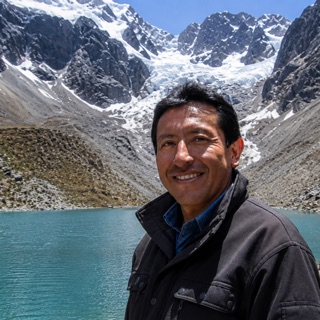 By Carlos Mamani, Humantay Lake tour guide & high-altitude specialist
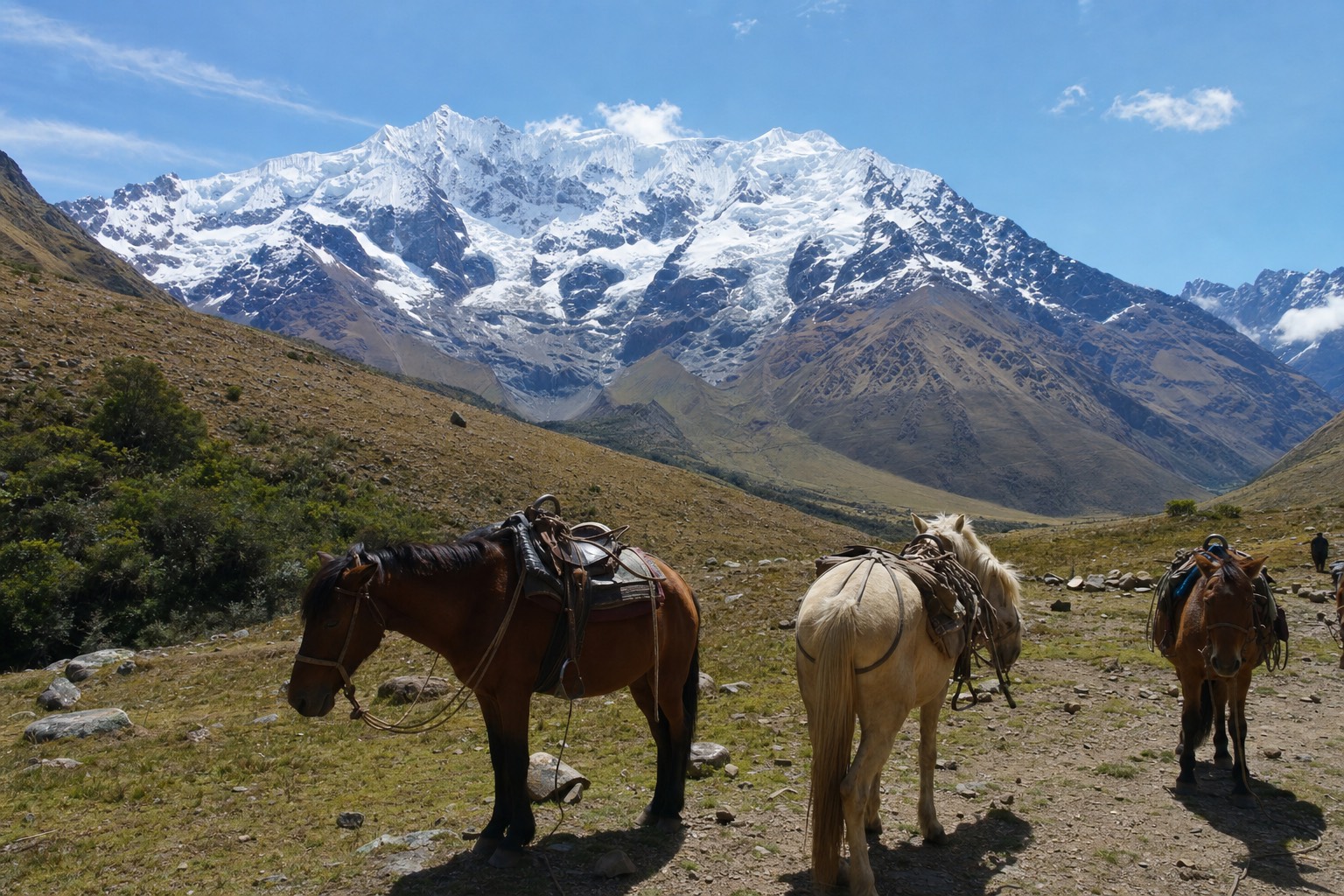
The horses smell the vans before I hear them. By the time we roll into Soraypampa around eight in the morning, the animals are already lined along the fence, breath steaming, saddles on, and their owners, men from the Mollepata communities who have worked this pampa for generations, are watching the doors open with a practiced eye. They can tell before anyone's boots touch the ground who will be riding today. Honestly, after four seasons of guiding this trail, so can I.
Then comes the moment I have watched a thousand times. Someone in the group looks at the horses, looks at the trail tilting up behind them, and starts doing arithmetic in their head while pretending to adjust a backpack strap. This post is for that person. There is a right way to make the horse decision, and it has nothing to do with pride.
The scene at the trailhead, and how the deal works
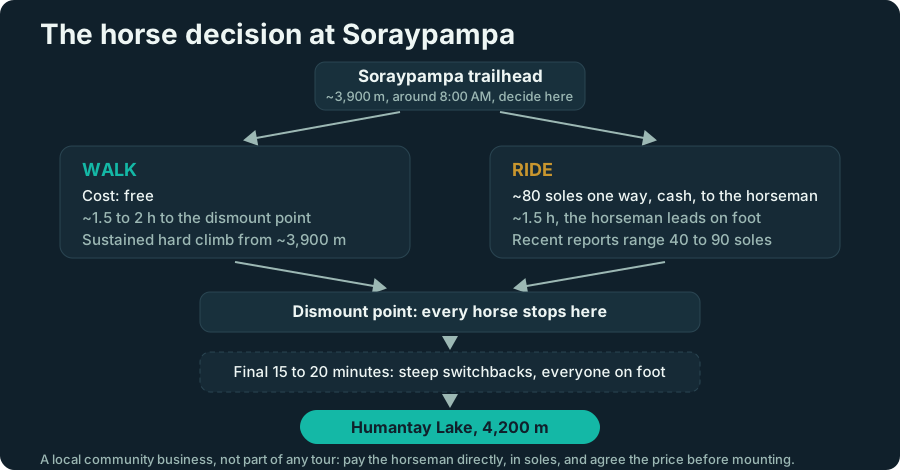
Horse rental at Soraypampa is a local community business, not part of any tour. You pay the horseman directly, in cash, in soles, around 80 soles one way, and he walks beside you leading the animal up the mountain. Your tour operator does not arrange it, take a cut, or guarantee it. Bring cash if the option matters to you.
Understand what you are looking at: this is the arrieros' economy, and it works on a handshake. The men own their animals, they queue informally among themselves, and the price is quoted per animal, one way, uphill. The operator of the featured departure says so plainly on its listing, roughly 80 soles one way, paid on site, not managed by the tour. Recent traveller reports put the spread anywhere from about 40 to 90 soles depending on the season, the crowd, and a little friendly negotiation, so treat 80 as the realistic planning number and anything less as a good morning.
Practicalities that save headaches. Small bills, soles only, no cards, no exceptions, there is nothing resembling a terminal on the pampa. Decide early, because on busy dry-season mornings the horses can all be spoken for by the time the second wave of vans arrives. And know that the same checkpoint area is where the community entrance fee is collected, recent reports put it at 10 to 20 soles with some travellers reporting up to 30, though the featured tour handles that one for you per its listing. I keep the fee details current in the entrance fee guide, and even Peru's rail company covers the basics in its Humantay overview.
| What you might pay at Soraypampa | Typical amount | Paid to whom | How |
|---|---|---|---|
| Horse, one way up | ~80 soles (reports range 40-90) | The horseman directly | Cash, soles, on the spot |
| Horse, both ways | Roughly double, agree first | The horseman directly | Cash, agree the total before mounting |
| Community entrance fee | 10-20 soles reported, sometimes to 30 | Checkpoint collectors | Handled by the featured tour per its listing |
| Tip for your guide | Your call | Guide, end of day | Cash, never required |
One variable shifts the whole calculation by the calendar, because the horses behave differently in the dry season than the wet.
| At the fence | Dry season (May-Sep) | Wet season (Oct-Apr) |
|---|---|---|
| Availability | Tight; the first vans claim them | Easier, fewer riders competing |
| Price mood | Firmer, toward the 80-90 end | More room to land nearer 40-70 |
| When to decide | Before the second wave of vans arrives | Still smart to decide early |
| The final walk underfoot | Dry, dusty switchbacks | Muddy, slick rock; poles help |
Who takes a horse, and why it is nothing to be embarrassed about
Riders are not the weak ones; they are the honest ones. People recovering from illness, travellers who landed in Cusco too recently, anyone with cranky knees, parents pacing themselves for a longer trip, and plenty of strong hikers who simply want to save their legs. The horse exists because this climb at this altitude is legitimately hard.
Let me dismantle the shame, because I watch it cost people their day. The climb from Soraypampa is short, about 3 kilometers, but it gains 300 to 470 meters on steep, rocky ground starting near 3,900 meters of elevation. That profile at that altitude humbles fit people constantly; I wrote the hike difficulty guide precisely because the numbers look so innocent on paper.
Here is what I actually see. The person who takes the horse at the trailhead arrives at the top with color in their cheeks and joy in their morning. The person who should have taken the horse but did not arrives forty minutes later, grey, furious at themselves, too wrecked to enjoy the lake they suffered for. One of these people made the smart mountain decision. The mountaineering world has a saying about leaving your ego at the trailhead, and Soraypampa is where this trail collects it.
And consider the other side of the transaction. Your 80 soles goes directly into the hands of a Mollepata family, no platform, no commission. The arriero economy is one of the few pieces of the Humantay boom that flows straight to the people whose land this is, below peaks their communities have considered sacred since long before Salkantay appeared in any guidebook.
| Situation | Does a horse help | The honest caveat |
|---|---|---|
| Landed in Cusco under 48 h ago | Enormously | You still feel the altitude; ride slowly, hydrate |
| Knee, hip, or back trouble | Yes, uphill | The descent is on foot and is knee-heaviest |
| Kids about 8+ / older parents | Often the difference-maker | Walker beside each rider; confirm comfort first |
| Fit but saving energy for a big trip | Legitimately, yes | Zero shame; I have seen triathletes ride |
| Fear of horses | It becomes stress, not help | Walk slow instead; the trail allows it |
| Pregnant travellers | The tour itself is not suitable | The listing excludes pregnancy outright |
What riding is actually like, and the stretch everyone walks
The ride takes roughly an hour and a half of swaying, steep, occasionally heart-in-mouth climbing with a horseman leading on foot. Then, 15 to 20 minutes below the lake, every horse stops. The final stretch is too steep for the animals, so riders and walkers finish the same rocky path together, on their own two feet.
Saddle reality first, because no one warns people. These are working Andean horses on ranch saddles, not trail-ride ponies on padded western rigs. You will sway. On a couple of rocky ramps the horse lurches upward and you will grab the saddle horn, and that is fine, everyone does. The horseman walks at the animal's head the whole way, choosing the line. Trust him; he has done this thousands of times. Wear long trousers or the stirrup leathers will let you know about it, and keep your daypack on your back, cinched tight.
Altitude does not excuse riders. You are still breathing thin air, working your core to stay balanced, and the horse's rhythm at nearly 4,000 meters can churn a nervous stomach. Riders need water and sun protection exactly as walkers do; the UV up here does not check how you travelled.
Then comes the dismount point, and I love this moment. The horses bunch on a flat shoulder below the final headwall, and suddenly there is no more hierarchy: everyone, riders and walkers, faces the same last 15 to 20 minutes of steep switchbacks to the lip of the lake. It is the hardest and best part of the trail. Whatever you paid or did not pay at the trailhead, you crest that rim on foot, breathing hard, and the turquoise hits everyone at the same angle and the same price.
| Walking up | Riding up | |
|---|---|---|
| Time to the dismount point | ~1.5-2 h | ~1.5 h |
| Cost | Free | ~80 soles one way, cash |
| Effort | Sustained hard climb | Core work and nerve, lungs still busy |
| The final 15-20 min | On foot, steep | On foot, steep, same path |
| The way down | ~1 h on foot | On foot for most; some horses take descents |
| What you remember | Earning every meter | The horseman's whistle, the swaying view |
Making the call without regret
Decide the night before, not in front of the fence. If you are acclimatized, healthy, and the difficulty guide reads as manageable, walk. If any honest doubt exists, budget the 80 soles, carry cash, and take the horse without a second thought. Both roads end at the same shore of the same impossible blue.
The regret I witness at Soraypampa almost never belongs to the riders. It belongs to walkers who overestimated day-two acclimatization, and, more quietly, to people who wanted the horse but had no cash and watched the option trot away. Put the soles in your pocket before you leave Cusco either way. An unspent 80 soles buys a very good lunch back in town; an unavailable horse buys nothing.
The rest of the day is easier to arrange than the horse, because it books in advance from your sofa. The version I point friends toward runs small groups with a bilingual guide, includes hot breakfast and buffet lunch in Mollepata, carries first aid and emergency oxygen, and handles the entrance fee per the listing: book the Humantay Lake day trip with both meals included and check live availability and prices on GetYourGuide. GetYourGuide shows 4.8 stars across more than 3,800 reviews, cancellation is free to 24 hours, and the horse decision stays exactly where it belongs, in your pocket, in cash, at the fence, at eight in the morning. For the deeper practical rundown, my horses at Humantay guide covers weights, kids, and every question I get at the briefing.
Last dry season an older gentleman from Texas stood at the fence for a long minute, then handed his soles over with a shrug and a grin: "I rode tractors all my life, figure I earned a horse." At the dismount point he climbed the final stretch slow and steady, and at the rim he took off his hat. His granddaughter had walked the whole way and beaten him by ten minutes. Neither of them, I promise you, was thinking about who rode.