Can You Combine Humantay Lake with Machu Picchu?
They sit in different valleys, served by different roads. Here is how to fit both into one Cusco trip without wrecking yourself.
 Written with Carlos Mamani, Humantay Lake tour guide & high-altitude specialist
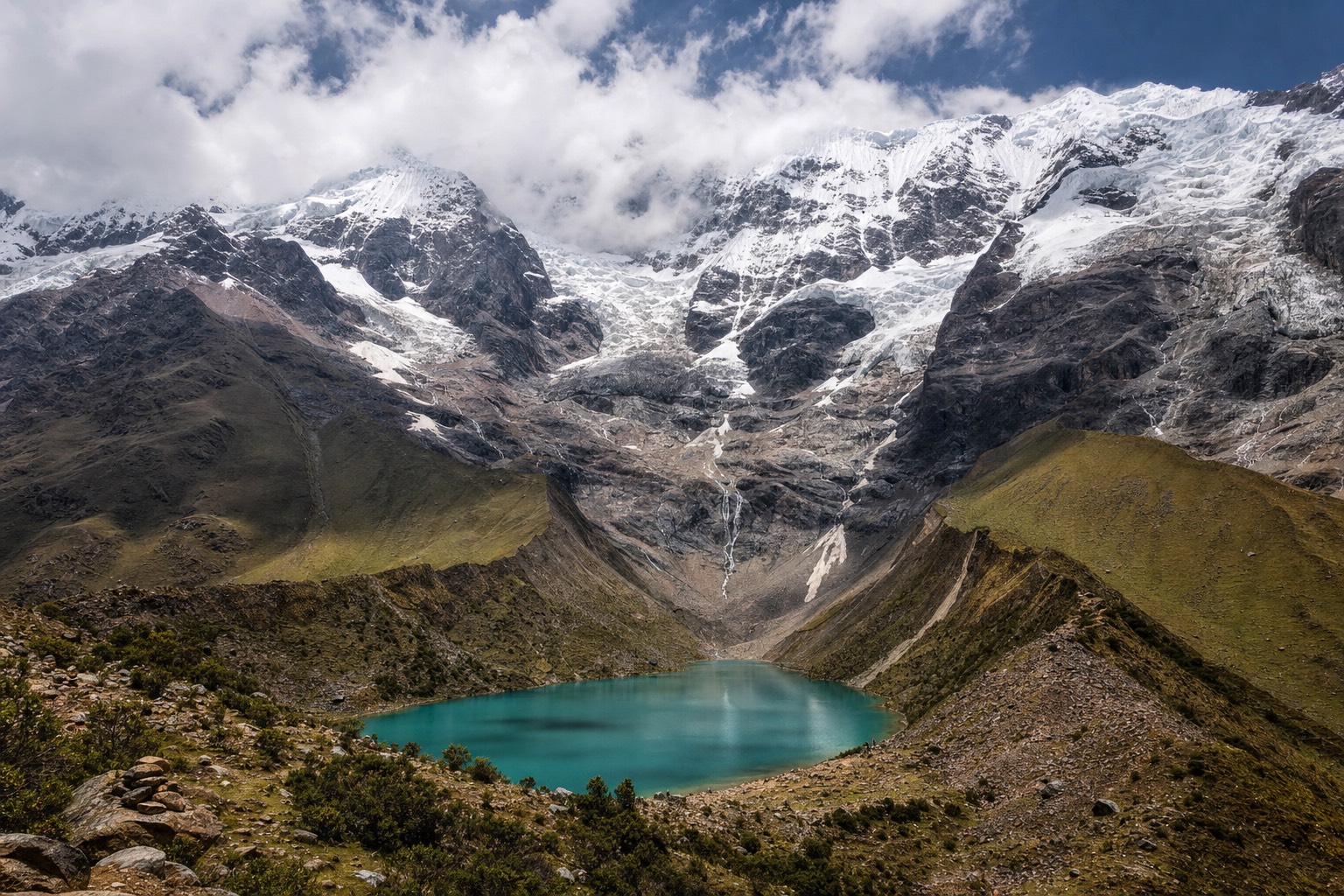
Short answer
Yes, almost every visitor does both, just never on the same day. Humantay Lake runs west via Mollepata; Machu Picchu runs by rail through the Sacred Valley. Spend two or three days acclimatizing in Cusco, hike the lake on day three or four, and put Machu Picchu the day after or before.
Every week someone asks me the same hopeful question at the Soraypampa briefing: can we squeeze Machu Picchu in this afternoon? I understand the instinct. You flew a long way, the two postcards sit an hour apart in your imagination, and Cusco's tour agencies sell both from the same doorway. The geography disagrees. Humantay Lake and Machu Picchu pull in different directions from Cusco, on a rough mountain road one way and a railway line the other, and each one already eats a full day on its own. The good news is that combining them across one week is not just possible, it is the standard trip. You only need to get the order right.
Can you visit Humantay Lake and Machu Picchu on the same trip?
Yes, and most Cusco visitors do exactly that. The two sites need separate days: the lake is a long day trip west via Mollepata, while Machu Picchu is reached by train through the Sacred Valley. With two or three acclimatization days first, both fit comfortably inside a five to seven day stay.
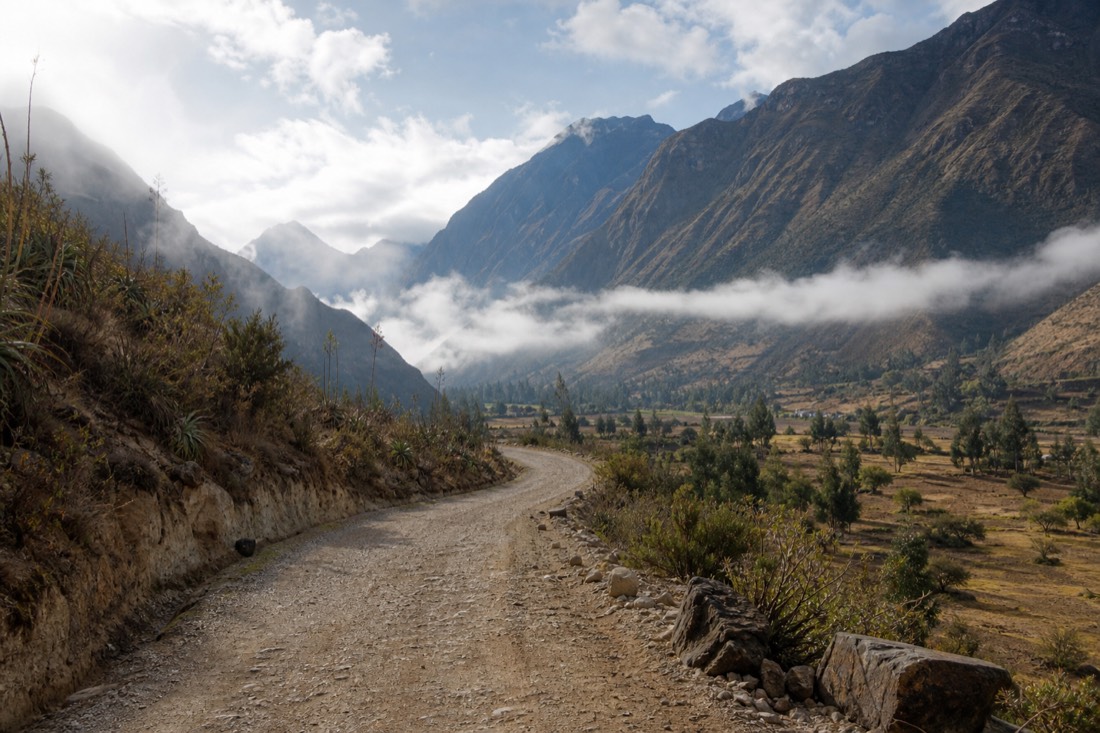
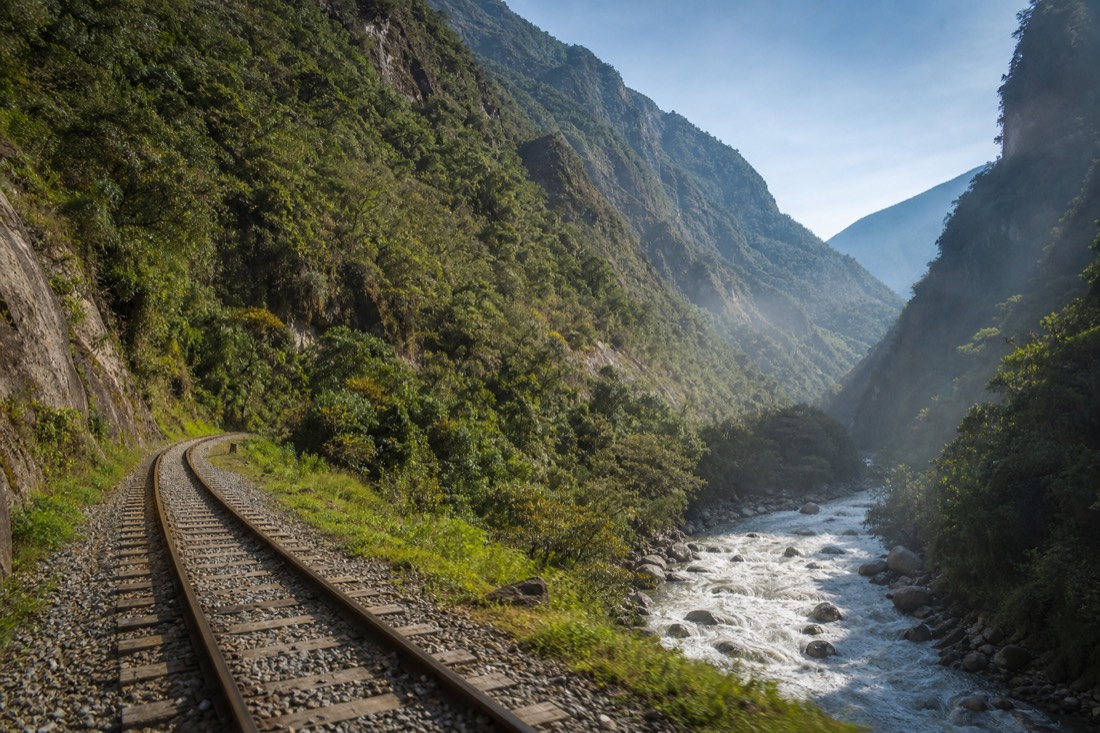
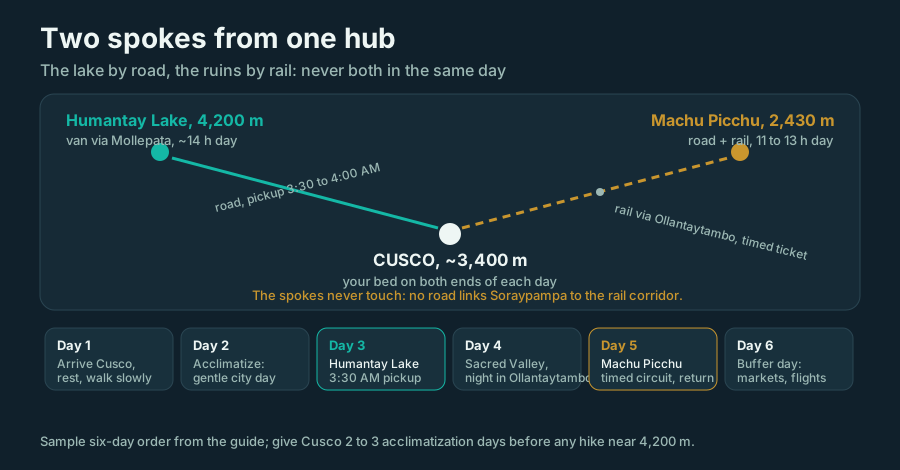
Think of Cusco as the hub of a wheel with two long spokes. The Humantay spoke runs about 3 to 3.5 hours by road through Limatambo to Mollepata and up a rough final stretch to the Soraypampa trailhead, then comes straight back the same way. The Machu Picchu spoke usually means a drive or train to Ollantaytambo, then a rail journey of roughly 1.5 to 2 hours down the Urubamba gorge to Aguas Calientes, the town below the ruins.
Those spokes never touch. There is no road link between Soraypampa and the rail corridor that a day visitor can use, so each spoke is its own out-and-back from Cusco. The only people who connect the two on foot are Salkantay trekkers walking four or five days over the mountains, a completely different undertaking I compare honestly in the day trip versus trek guide.
The practical consequence is simple. Book the lake and the ruins as two separate days with a night in Cusco between them, and treat any agency that promises both in one day with deep suspicion, because the clock says no.
| Humantay Lake day | Machu Picchu day | |
|---|---|---|
| Direction from Cusco | West, road via Limatambo and Mollepata | Northwest, rail corridor via Ollantaytambo |
| Transport | Van, last stretch unpaved | Vehicle plus train, then shuttle bus up |
| Typical pickup | 3:30 to 4:00 AM | Early morning, varies with train time |
| Door-to-door time | ~14 hours | ~11 to 13 hours |
| Highest point | Lake at ~4,200 m | Ruins at ~2,430 m |
| Physical effort | Steep 1.5 to 2 hour climb | Mostly walking terraces and stairs |
Why can't you do both in one day?
Because each one is already a maximal day. The lake tour runs about fourteen hours with a 3:30 AM pickup; a Machu Picchu day trip runs eleven to thirteen. They start from the same city in different directions, and Machu Picchu now requires a timed entry slot booked in advance, which leaves zero slack for a same-day combination.
Walk through the arithmetic once and the dream dies quietly. The lake tour returns to Cusco in the early evening. The last trains toward Aguas Calientes leave Ollantaytambo well before that, and Ollantaytambo itself is nearly two hours from Cusco by road. Even a private driver cannot bend that timetable.
The ticket system closes the door completely. Machu Picchu entry now works on timed slots tied to fixed walking circuits, sold in advance through the official government portal, with the popular dates selling out ahead of time. PeruRail's ticket guidance lays out the current system. A missed slot is simply gone; no guard at the gate cares that your van from Soraypampa hit traffic in Limatambo.
There is also your body to consider. The lake day takes you to 4,200 m on very little sleep. Stacking a second pre-dawn start on top of that is how people end up dozing through the ruins they crossed the world to see. Give yourself the night in Cusco between the two. Your photographs will thank you.
Which order works better, and where do the acclimatization days go?
Acclimatize in Cusco for two or three days first, doing the city and lower Sacred Valley sights. Hike Humantay on day three or four, once your body has adjusted. Machu Picchu can sit on either side of the lake day, because at 2,430 m it is a descent, not a climb.
Altitude sets the order more than logistics do. Cusco sits around 3,400 m, and the standard guidance I give every group is two full days there, or in the slightly lower Sacred Valley, before attempting anything near 4,200 m. Hydrate, walk slowly, skip the pisco the first nights. My acclimatization guide covers the details, including who should allow a third day.
Machu Picchu is the flexible piece. At 2,430 m it is nearly a kilometre lower than Cusco, so it works as a gentle day even early in your trip. Some visitors deliberately schedule it before the lake as active recovery. Others prefer it after, as the grand finale. Both orders work; the only rule I insist on is that the lake never lands on day one or two.
| Scenario | Does it work? | The honest note |
|---|---|---|
| Lake on day 3-4, Machu Picchu after | Yes, the classic order | Best acclimatization logic, big finish at the ruins |
| Machu Picchu first, lake after | Yes | The ruins double as a low-altitude rest day |
| Lake on day 1 or 2 | Bad idea | Soroche risk is highest exactly then |
| Both in one day | No | The roads, trains and timed tickets make it impossible |
| Lake day trip from Ollantaytambo or Aguas Calientes | No | Tours pick up in Cusco's historic center; return to Cusco first |
What if you are already in Ollantaytambo or Aguas Calientes?
You must come back to Cusco first. The lake tours collect passengers from hotels in Cusco's historic center in the 3:30 to 4:00 AM window, and no scheduled Humantay departure originates in the Sacred Valley or Aguas Calientes. Plan the train back the evening before your lake day.
This catches people who built their trip around the Sacred Valley. It feels efficient to sleep in Ollantaytambo and intercept a passing tour, but the vans head west out of Cusco through Poroy and Limatambo, nowhere near the valley towns. From Aguas Calientes the situation is stricter still: the only way out is the train, and by the time the morning services reach Ollantaytambo and a driver gets you to Cusco, every lake departure left hours ago.
The fix is one unglamorous evening. Ride the train back, check into a Cusco hotel near the Plaza de Armas, lay out your layers and water, and sleep early. The pickup will find you a few minutes' walk from your door, and the drop-off returns you to the same neighbourhood around dinner. Where you sleep matters more than usual on a 3:30 AM start, so pick somewhere within a short walk of the Plaza de Armas.
When you are ready to fix the lake day itself, take the one this site features: the small-group Humantay Lake day trip with breakfast and buffet lunch, which handles pickup, both meals, the entrance fee and emergency oxygen, and check live availability and prices on GetYourGuide. Free cancellation to 24 hours means you can lock the date now and shuffle later if your trains move.
How do I order a Cusco week so the altitude never ambushes anyone?
Read the week as an altitude staircase, not a checklist. Cusco sits near 3,400 m, the lake at 4,200 m, and Machu Picchu far lower at 2,430 m. Spend the first two or three days low and easy, put the lake on day three or four once your body has adjusted, and drop the ruins wherever they fit, because at 2,430 m they ask almost nothing of your lungs.
This is the single framing I wish every visitor arrived with, because it quietly solves most of the planning arguments I overhear at breakfast. People instinctively want to knock out the hardest, highest thing first while they are fresh and excited. At altitude that instinct is backwards. Freshness does not help you at 4,200 m; days in Cusco do. The traveller who hikes the lake on day four almost always has an easier, brighter morning than the one who forced it on day two, and I have watched that pattern hold across four seasons on this trail.
Machu Picchu is the piece that confuses people, and it should not. At 2,430 m it sits nearly a full kilometre below Cusco, so it is a rest for your body rather than a demand on it. That is why it slots in on either side of the lake day without much thought. Some of my groups treat it as a low-altitude recovery day before the climb; others save it as the grand finish. Both work, and I explain the reasoning in more depth in the acclimatization guide.
One caveat about that lower number, because people over-read it. Machu Picchu being gentle on your lungs does not make it a throwaway half-day. It still fills a full day, still starts early, and still means a train, a bus and a great many stairs. When I call it easy I mean the altitude only. Slot it wherever your tickets allow, but never assume it can share a day with anything ambitious, least of all the lake.
The Sacred Valley deserves its own line in the staircase, because it does quiet, useful work. Towns like Ollantaytambo and Urubamba sit around 2,800 to 3,000 m, lower than Cusco itself, so a night or a day out there is not lost time. It keeps you moving and sightseeing while your body carries on adjusting at a friendlier elevation, which is why I often nudge groups to spend a valley day before the lake rather than after. You acclimatize by living slightly high and sleeping slightly lower, and the valley is built for exactly that.
The ladder below is the mental picture I sketch at the Soraypampa briefing when someone asks why we did not just do the lake on arrival.
| Stage of the week | Rough elevation | Why the order matters |
|---|---|---|
| First nights in Cusco | ~3,400 m | Your body does most of its adjusting here; go slow |
| A Sacred Valley outing | ~2,800 to 3,000 m | Lower than Cusco, a gentle way to keep acclimatizing |
| Humantay Lake | ~4,200 m | The week's high point; wants 2 to 3 settled days first |
| Machu Picchu | ~2,430 m | A descent, not a climb; kind on any day of the trip |
Where the lake lands in the week decides how hard it feels, more than fitness does. Run your own plan against the little scorecard I keep in my head, and adjust before you commit rather than after.
| If you hike the lake on | Soroche risk | My honest verdict |
|---|---|---|
| Day 1 or 2 | Highest | Move it; you have not adjusted yet |
| Day 3 | Moderate, usually fine | The earliest I am comfortable with |
| Day 4 or later | Lowest | The safe, comfortable choice |
| After Machu Picchu | Low if you kept your Cusco nights | Fine; the ruins double as a rest day |
What has to be booked ahead, and how far?
Two things sell out and one does not. Machu Picchu entry runs on timed slots sold in advance through the official government portal, with 2026 dates released from November 2025, and the popular days go early. Trains fill in the peak months. The lake day trip is the flexible piece, bookable closer in and carrying free cancellation to 24 hours.
The mistake I see most often is people treating all three bookings as equally urgent, then panicking over the wrong one. Machu Picchu is the genuinely time-sensitive piece. Its entry works on fixed circuits and timed windows, capped daily and sold through the government system, so a July slot bought in July may simply not exist. If your heart is set on a particular date or the Huayna Picchu add-on, that reservation comes first and everything else bends around it.
Trains are the second pressure point, though a softer one. In high season and around Peruvian holidays the convenient morning and late-afternoon services between Ollantaytambo and Aguas Calientes book up, and that 1.5 to 2 hour ride is the only way in and out for most visitors. Lock the train once your Machu Picchu slot is fixed, because the two have to agree with each other.
There is a quiet trap inside the ticket rules worth naming. Because Machu Picchu slots are tied to a fixed circuit and a timed window, a change of plan is not a simple swap. A missed or mistimed entry is usually gone for good, with no refund and no guard willing to bend it for a van that hit traffic. That rigidity is precisely why I build the whole week around the ruins rather than the other way round. Everything flexible, the lake included, gets arranged to protect that one immovable appointment.
The lake day is the forgiving one, which is exactly why I tell people to sort it last and stop stressing about it. A small-group tour can usually be reserved days rather than months ahead, and with free cancellation to 24 hours you can hold a date and shuffle it if your trains move. Here is the order of urgency I give friends, framed as planning guidance rather than a promise, since availability shifts with the season.
| What to book | Where | How far ahead |
|---|---|---|
| Machu Picchu entry | Official government portal | Weeks to months; 2026 dates from Nov 2025 |
| Train to Aguas Calientes | The rail operator | Weeks in peak season |
| Humantay Lake day trip | The operator's listing | Days; free cancellation to 24 hours |
| A Cusco hotel near the Plaza | Your choice | Early, so the pre-dawn pickup finds you |
One habit saves more trips than any single booking tip: leave a buffer day. Trains run late, weather shifts on the road to the trailhead, and a fourteen hour lake day on little sleep leaves most people flat the next morning. A single day of slack near the end of the week turns a delayed train or a rough altitude night from a wrecked plan into a shrug. Build the week tight enough to hold both wonders, loose enough to survive one of them going sideways.
How early all of this bites depends heavily on when you travel. In the dry-season peak, roughly June through August, and over local holidays, the good Machu Picchu slots and trains vanish weeks ahead, so the booking order above becomes urgent rather than advisory. In the quieter shoulder months there is more give in the system, and you can often hold a plan together closer in. Either way the sequence holds: the ruins first, the train to match, then the flexible lake day, then a hotel your pre-dawn pickup can actually reach.
What does a realistic 5-7 day itinerary look like?
Six days is the sweet spot: two easy Cusco days, the lake on day three, Machu Picchu on day five with a Sacred Valley night before it, and a buffer day at the end. Five days works if you compress the valley; seven lets you add Rainbow Mountain or a slow market day.
Here is the shape I sketch for friends who visit, adjusted for a Machu Picchu-after-the-lake order.
| Day | Base | Plan |
|---|---|---|
| 1 | Cusco | Arrive, walk slowly, early night. Nothing ambitious. |
| 2 | Cusco | San Blas, Qorikancha, coca tea, gentle acclimatization walking |
| 3 | Cusco | Humantay Lake day trip, 3:30 AM pickup, evening drop-off |
| 4 | Ollantaytambo | Sleep in, Sacred Valley sights en route, night near the station |
| 5 | Cusco | Early train to Aguas Calientes, timed Machu Picchu circuit, return |
| 6 | Cusco | Buffer and recovery day, markets, flights out or onward |
| 7 (optional) | Cusco | Rainbow Mountain, Moray and Maras, or simply more Cusco |
Swap days three and five if your Machu Picchu slot only exists early in the week; the ruins-first order is kinder than it looks because of the lower altitude. Whatever you do, defend the buffer day. Trains run late, weather shifts, and soroche has opinions. A day of slack turns those from disasters into anecdotes. For the fuller hour-by-hour version of the lake day itself, see the complete itinerary guide.
The pairing is worth the planning. One day you stand under a glacier at 4,200 m, and two days later you look down on stone terraces in warm cloud-forest air. Few places on earth put two such different wonders within an hour's flight of a decent espresso. Give them each their own day and they will each give you their best.