What Does the Humantay Day Look Like, Hour by Hour?
Fourteen hours, two meals, one climb. Here is the whole day laid out hour by hour, so nothing on it surprises you except the colour of the water.
 Written with Carlos Mamani, Humantay Lake tour guide & high-altitude specialist
Short answer
Pickup runs 3:30 to 4:00 AM in Cusco's historic center, then about three hours of driving with a hot breakfast stop in Mollepata. From the Soraypampa briefing it is a 1.5 to 2 hour climb, 30 to 45 minutes at the shore, an hour down, buffet lunch back in Mollepata, and an evening drop-off near the Plaza de Armas.
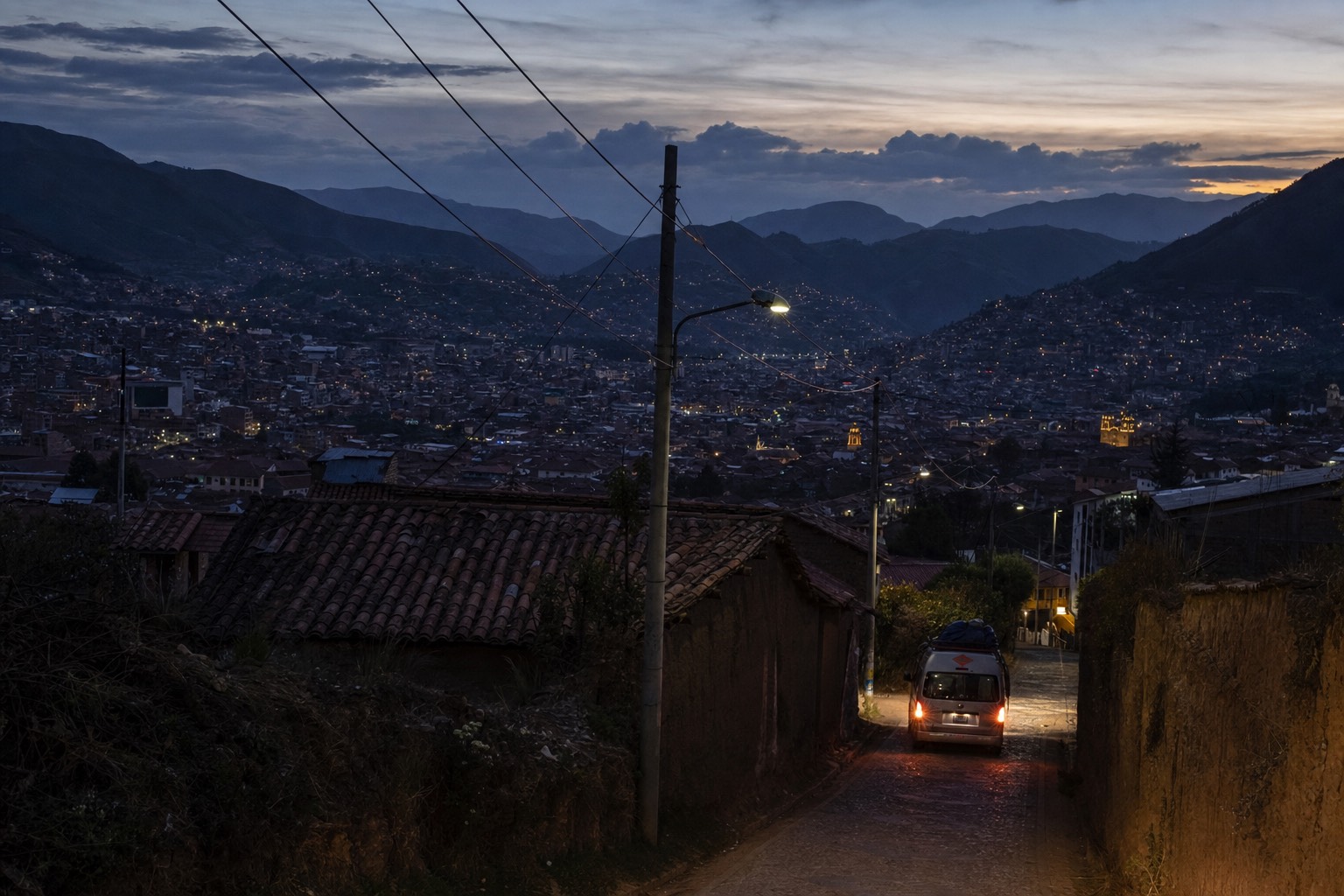
The knock comes at 3:40 in the morning and the street outside is still last night's Cusco: a dog trotting down the middle of the cobbles, one bakery light on, cold air that smells of eucalyptus smoke. I have started this day more times than I can count since 2022, and the shape of it barely changes. What changes is how ready people are for it. Fourteen hours is a long day at any altitude. Knowing exactly where each of those hours goes turns it from an endurance test into a rhythm you can settle into.
Why does the day start at 3:30 in the morning?
The pickup window is 3:30 to 4:00 AM from hotels and hostels in Cusco's historic center, and the early start is functional, not sadistic. Morning at the lake means calm air, clear light on the glacier, and thinner crowds. Afternoons above 4,000 metres bring wind, cloud and, in season, rain.
The mountain sets the schedule. Weather in the high Andes follows a daily script: still, clear mornings, building wind from late morning, and cloud that boils up the valleys after lunch. The turquoise that fills every photo of the lake is glacial rock flour lit by direct sun. Arrive under afternoon cloud and the same water reads grey. Arriving between roughly 9:30 and 11 in the morning is the whole game, and the arithmetic backwards from there lands you in a van at 4 AM.
There is a second reason: everyone else is playing the same game. The tours that leave Cusco earliest reach the trailhead first, which means horses still available at Soraypampa, an emptier trail, and shoreline photos without forty strangers in them. I wrote about surviving the wake-up itself in the 3:30 AM alarm, but the short version is: lay everything out the night before, and sleep in your hiking layers if you must.
The van seats are yours for the next stretch, and this first drive is dark anyway. Most people are asleep again before the city ends. You are not missing scenery, Cusco at 3,400 metres gives way to black valley and stars, and the real views start with daylight near Limatambo.
What happens on the drive out to the trailhead?
Around three hours of driving, split in two: roughly two hours on paved road from Cusco through Limatambo to Mollepata, where a hot breakfast stop of about 30 minutes waits, then a final hour climbing an unpaved mountain road to the Soraypampa trailhead at about 3,850 to 3,900 metres.
| Drive segment | Time | Road and what to expect |
|---|---|---|
| Cusco to Limatambo | ~1.5 h | Paved highway, dark, most people sleep |
| Limatambo to Mollepata | ~30 min | Paved then winding, first light in the valley |
| Breakfast in Mollepata | ~30 min | Hot breakfast included, last proper toilets |
| Mollepata to Soraypampa | ~1 h | Unpaved, rough, big views as the sun comes up |
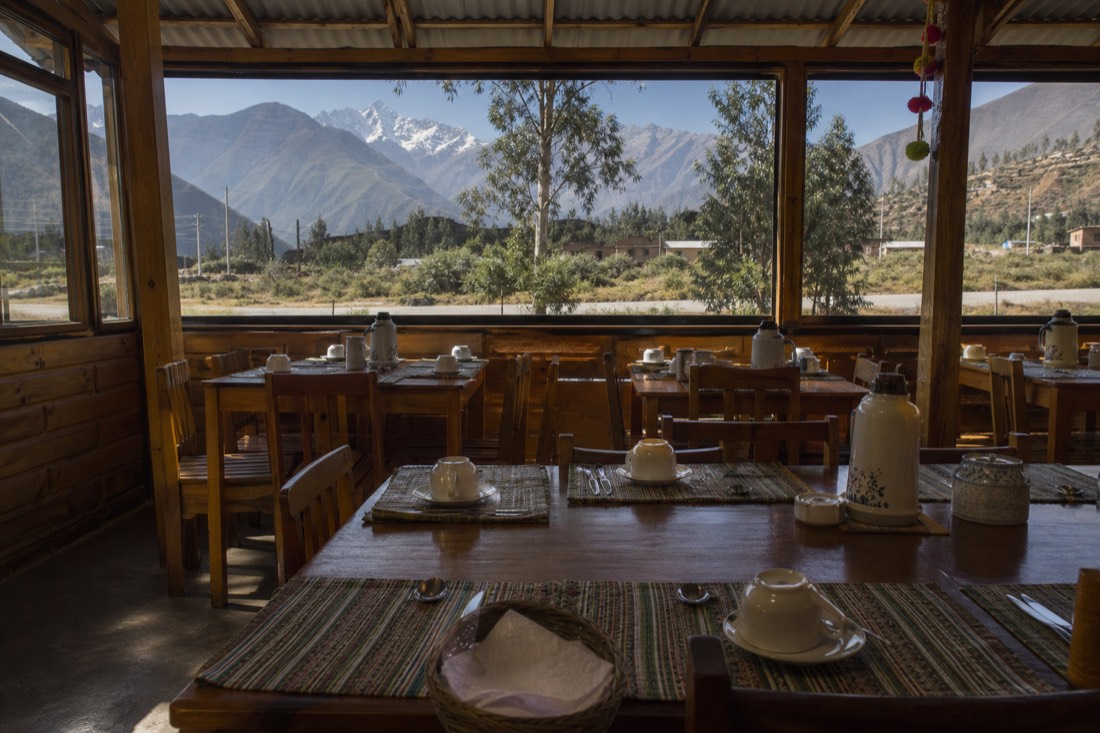
Breakfast in Mollepata is not a snack stop, it is the anchor meal of the morning: bread, eggs, fruit, hot drinks, with the vegetarian option covered. Eat properly even if 6 AM feels early for appetite, because the climb runs on this fuel. Mollepata is also your last civilised stop in every sense. Reasonable toilets, small shops for anything you forgot, and mobile signal that will shortly disappear.
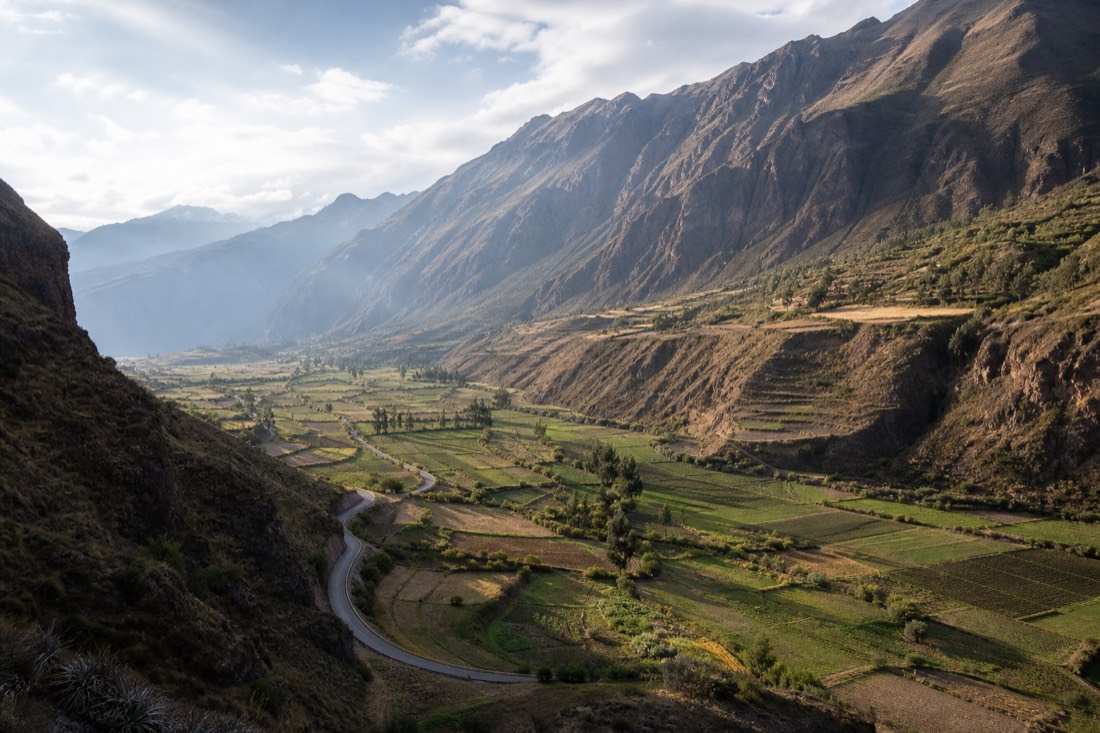
The last hour is the drive people remember. The road to Soraypampa is unpaved and unhurried, switchbacking up a valley wall with the Salkantay massif filling more of the windscreen at every turn. It is bumpy. If you are prone to motion sickness, claim a front seat at breakfast and keep your eyes on the horizon.
What is the hour-by-hour timeline?
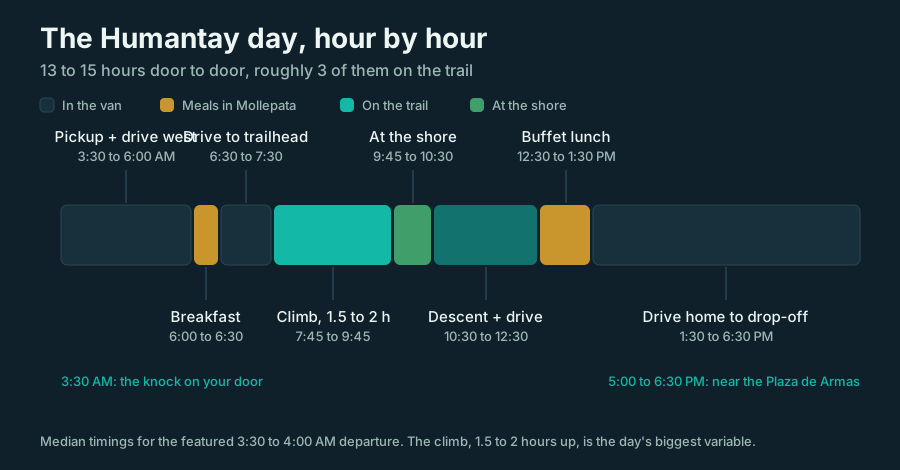
From a 3:30 AM pickup, expect breakfast around 6, the trailhead briefing around 7:30, the shore between 9:30 and 10, lunch back in Mollepata around 1:30, and a drop-off near the Plaza de Armas between 5:00 and 6:30 PM. Call it 13 to 15 hours door to door.
Every operator's minutes differ slightly, and weather or traffic can shuffle the deck, but the day below is the honest median of how this trip actually runs.
| Time | What is happening |
|---|---|
| 3:30 to 4:00 AM | Pickup at your hotel or hostel in Cusco's historic center |
| 4:00 to 6:00 AM | Drive west via Limatambo, mostly asleep |
| 6:00 to 6:30 AM | Hot breakfast in Mollepata, vegetarian option available |
| 6:30 to 7:30 AM | Unpaved climb to the Soraypampa trailhead |
| 7:30 to 7:45 AM | Briefing: pacing, water, the horse decision |
| 7:45 to 9:45 AM | The climb, 1.5 to 2 hours, steep and rocky |
| 9:45 to 10:30 AM | Time at the shore: photos, the guide's stories, quiet |
| 10:30 to 11:30 AM | Descent to Soraypampa, about 1 hour |
| 11:30 AM to 12:30 PM | Drive back down to Mollepata |
| 12:30 to 1:30 PM | Buffet lunch in Mollepata |
| 1:30 to 5:00 PM | Return drive to Cusco |
| 5:00 to 6:30 PM | Drop-off near the Plaza de Armas |
Two honest notes on reading this table. First, the climb duration is the biggest variable in the whole day: a fit, acclimatized walker does it in 90 minutes, and a struggling one needs well over two hours, which is why guides build slack into the middle of the day. Second, shore time flexes with the group and the weather. On a calm blue morning guides stretch it; when the wind turns or cloud drops onto the glacier, they wisely do not.
This timeline is exactly what the featured small-group day delivers, with both meals, entrance fee handling, first aid and emergency oxygen built in. If the structure works for you, book the Humantay Lake day trip with both meals included and check live availability and prices on GetYourGuide. It holds 4.8 stars across 3,809 reviews on the listing, cancels free up to 24 hours, and takes reserve now, pay later, which matters when you are juggling acclimatization days.
What is the climb from Soraypampa actually like?
Three kilometres one way with roughly 300 to 470 metres of gain, on a steep, rocky, obvious trail. Count on 1.5 to 2 hours up at a sensible altitude pace and about an hour down. The final 15 to 20 minutes are the steepest, and that section is on foot even for riders.
The briefing at Soraypampa is short and worth your full attention. The guide covers pacing, points out the horse option (about 80 soles one way, covered properly in the horse guide), and sets the turnaround expectations. Then the trail goes up, and it does not really stop going up. There is no scrambling and no exposure, just sustained, rocky, thin-aired climbing where the winning move is embarrassingly slow steps and steady breathing.
Here is roughly where your effort goes on the mountain itself:
| Trail segment | Time | Character |
|---|---|---|
| Soraypampa meadow to first switchbacks | ~20 to 30 min | Gentle warm-up, deceptive |
| The switchbacks | ~50 to 70 min | Steep, rocky, the honest work |
| Horse drop-off to the lip | 15 to 20 min | Steepest part, everyone on foot |
| At the shore | 30 to 45 min | Wind-dependent, sacred site, no swimming |
| Descent to Soraypampa | ~1 h | Knee toll, poles help |
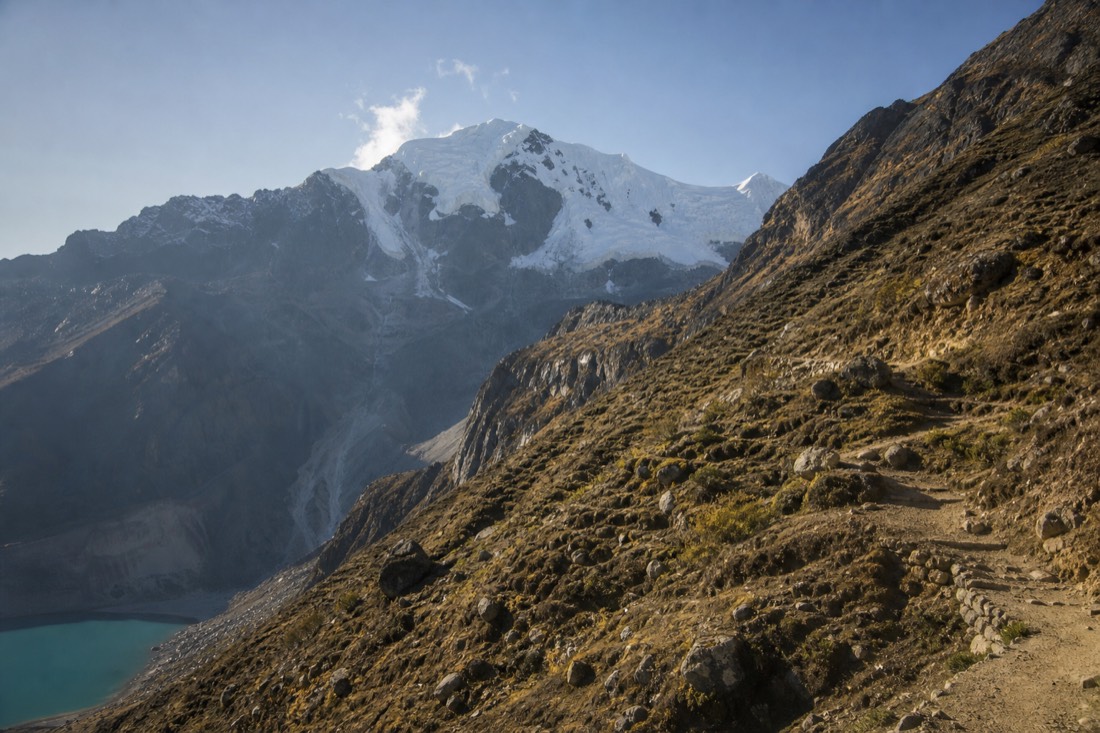
At the top, Humantay Lake sits at about 4,200 metres under its glacier. The lake is sacred to local communities and entering the water is prohibited, so shore time is for photos, coca tea from your flask, and the guide's explanation of the apachetas, the small stone towers travellers leave. It is genuinely not a place anyone rushes.
What about lunch and the ride home?
The buffet lunch waits in Mollepata around 12:30 to 1:30 PM, with a vegetarian option, and it is the meal your body has been asking for since the switchbacks. The return drive lands you near the Plaza de Armas between 5:00 and 6:30 PM, roughly 13 to 15 hours after the knock on your door.
Lunch back in Mollepata is where the day exhales. The buffet runs to soups, rice, chicken, pasta, salads and the vegetarian line, and after a 4,200-metre morning it disappears fast. This is also where the group finally talks; the pre-dawn van was silent and the trail was all breathing.
The ride home is the sleepy mirror of the ride out, in daylight this time, down the Limatambo valley with the afternoon light on the terraces. Drivers usually make one quick stop. Most people are asleep again by Limatambo and wake up in the evening bustle near the Plaza de Armas, somewhere between 5:00 and 6:30 PM depending on traffic.
Plan nothing for the evening except a shower and an early dinner. And plan the day itself around your body: this itinerary is far kinder with two acclimatization days in Cusco behind you, and what you carry matters more than you think, which is exactly what the packing guide covers next.
How does the season change the shape of the day?
The bones of the day stay fixed year round, but the margins move with the weather. In the dry season the clear-morning window is wide and forgiving. In the rainy months the cloud and rain build sooner, so the whole schedule leans earlier and shore time shortens. Traffic and the group's own pace flex it further.
The timings in the tables above are the honest median, but nobody actually travels on a median. What decides your particular day is mostly the sky. From May to September the still, bright mornings hold long enough that a group arriving at the shore around 9:30 or 10 comfortably catches the turquoise at its best. From November to March the cloud can be boiling up the valley by late morning, which is why guides in those months push the pace a little and rarely linger.
The last hour to Soraypampa is the stretch of the drive the seasons touch most. In the dry months that unpaved road is dusty but firm and the van keeps a steady pace. After heavy rain it turns greasy and slow, adding fifteen or twenty minutes and the odd nervous moment, one more reason the wetter months reward leaving on time. If you are prone to motion sickness, this is the section to have claimed a front seat for and eaten a real breakfast before, not the switchbacks later on an empty stomach.
| Season | What shifts in the timing | What it means for you |
|---|---|---|
| Dry, May to September | Clear, stable mornings, wind later | The 9:30 to 10 AM light window holds; least rushed |
| Shoulder, April and October | Mixed, storms can build by early afternoon | Aim to be up and back a touch earlier |
| Rainy, November to March | Cloud and rain build sooner | An early start pays off; shore time often trimmed |
Season aside, a handful of stages are where the schedule tends to slip, and it helps to know which so a late finish does not catch you off guard. The best-time-to-visit guide goes deeper on the seasons themselves; this is about the clock.
| Stage of the day | Runs on schedule | Where it can slip | Usual reason |
|---|---|---|---|
| Morning pickup | 3:30 to 4:00 AM | Toward 5:00 AM | Several hotel stops before the road |
| The climb | 1.5 to 2 h | 2.5 h or more | Altitude and the slowest walker's pace |
| Time at the shore | 30 to 45 min | Cut short | Wind or cloud dropping onto the glacier |
| Return to Cusco | Drop-off 5:00 to 6:30 PM | Later | Afternoon traffic into the city |
A late pickup is the delay that quietly costs the most, because everything downstream inherits it. Thirty minutes lost to hotel stops in the dark can mean reaching the shore closer to eleven, in stronger wind and thicker crowds, with the turquoise already dulling. There is little you can do about the driver's route through Cusco, but being ready and waiting at your door at 3:30 rather than 3:45 genuinely helps the whole van, and yourself most of all.
How do I pace a group that landed in Cusco yesterday?
When someone tells me at the 3:40 pickup that they flew in the previous afternoon, my plan for them changes on the spot. I slow everything down, add breath stops they did not ask for, watch their breathing on the first switchbacks, and I raise the horse option early rather than let pride carry them into trouble at 4,000 metres.
A fresh arrival is the single biggest variable in how the middle of the day runs. Two people of identical fitness can climb the same trail forty minutes apart purely on how many nights they have slept in Cusco, and I would far rather build that slack in from the trailhead than watch someone unravel two-thirds of the way up. Slow and steady genuinely wins here; the mountain does not reward a fast start.
What I am really doing on those first switchbacks is listening. A fresh arrival who has gone quiet, stopped drinking, or grown a headache that will not lift is telling me something, and the honest move is to slow further or put them on a horse, not to chase a summit time. The tour carrying emergency oxygen and a first aid kit is not decoration; it is there for exactly the morning when a body says no. Turning a struggling walker around early is rare, but I would do it without hesitation over a photograph.
The descent deserves its own word too, because it is where tired, elated people get careless. After the shore the adrenaline drops, the legs are heavy, and the same loose rock that was merely slow on the way up becomes a trip hazard going down. I keep the pace deliberate here and remind people that most of the small injuries I have seen on this trail happen in the last hour, not the climb. Poles earn their place, and so does eating something before you start down.
Between the stops I keep people drinking and, for those who want it, chewing coca leaves or sipping coca tea from a flask, the traditional altitude aid you will see every guide and muleteer using up here. It is no substitute for having acclimatized, but on a long climb at 4,000 metres the small rituals of a steady sip and a slow breath do more for a tired group than any pep talk I could give them.
So my pacing is really a reading of the group's acclimatization, adjusted stop by stop. Here is roughly how the same climb stretches or compresses depending on how long people have been at altitude, which is also why the schedule builds in slack across the middle of the day.
| Days acclimatizing in Cusco | How I pace the climb | Realistic time up |
|---|---|---|
| Arrived yesterday | Very slow, frequent breath stops, symptom checks, horse on the table early | 2 to 2.5 h |
| Two full days | Steady and slow, short regular pauses | About 2 h |
| Three or more, and hiking-fit | Normal trail rhythm, fewer stops | Around 1.5 h |
Shore time is the other thing I manage by the group in front of me rather than the clock. On a calm, blue morning with everyone breathing easily I stretch it, let people sit with the lake and the apachetas and brew coca tea. When the wind comes straight off the glacier and lips are going pale, thirty minutes is plenty and nobody argues. The safety guide covers the altitude signals I am reading the whole time we are up there.
The reward for all that patience is the same for everyone, whatever their pace. Humantay Lake sits sacred and glacier-fed at about 4,200 metres, and the group that crests the lip breathing hard but intact enjoys the shore far more than the one that raced up and arrived wrecked. The clock matters, but the body sets the real timetable.